
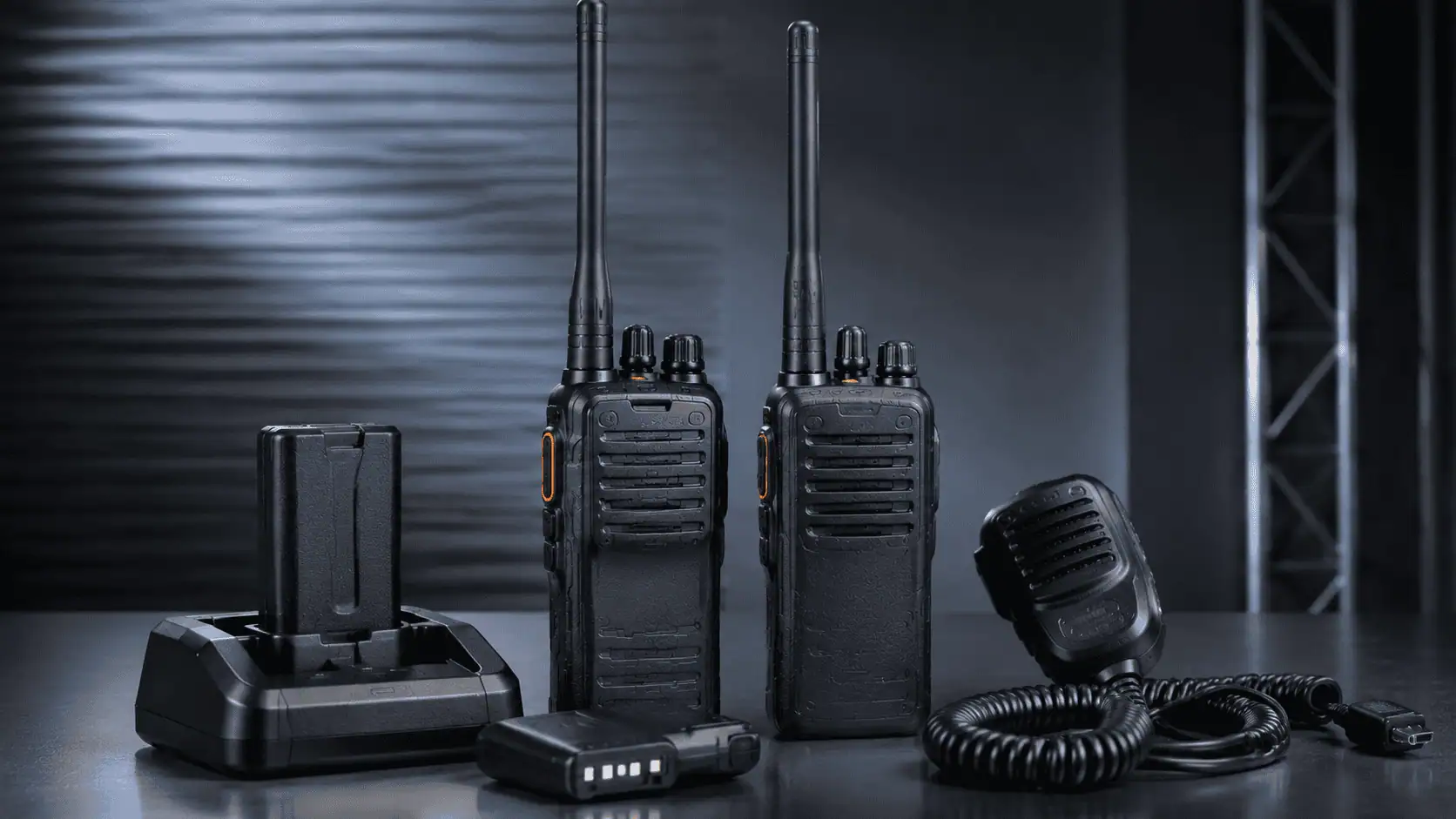
Production Crew Radio Guide
Walkie Talkies for Film and Video Production Crews
Choose discreet, reliable two way radios, earpieces, batteries and charging kits for film sets, video crews, studios, events and production rental fleets.
Short answer: The best walkie talkies for film and video production are lightweight two way radios with discreet earpiece support, long battery life, clear audio, multiple channels, quiet operation and reliable coverage across studios, locations, backlots and event spaces.
On a film or video production set, communication must be instant, discreet and reliable. A missed cue, delayed instruction or dropped call can waste time, disrupt a take and slow down the entire crew.
Quick Recommendation by Production Type
| Production Type | Recommended Radio Setup | Why It Fits |
|---|---|---|
| Small video crew | Analog two way radios + earpieces | Simple, cost-effective and quick to deploy. |
| Studio or indoor set | Compact radios + discreet earpieces + spare batteries | Keeps communication private and reduces sound disruption. |
| Large film crew | DMR radios + department channels + multi-unit chargers | Supports AD, camera, grip, electric, production and security teams. |
| Outdoor or remote location | Long range radios + spare batteries + speaker microphones | Supports wider coverage and longer shooting days. |
| Rental house or production supplier | OEM radio kits with earpieces, chargers and packaging | Useful for repeat rental fleets and private label supply. |
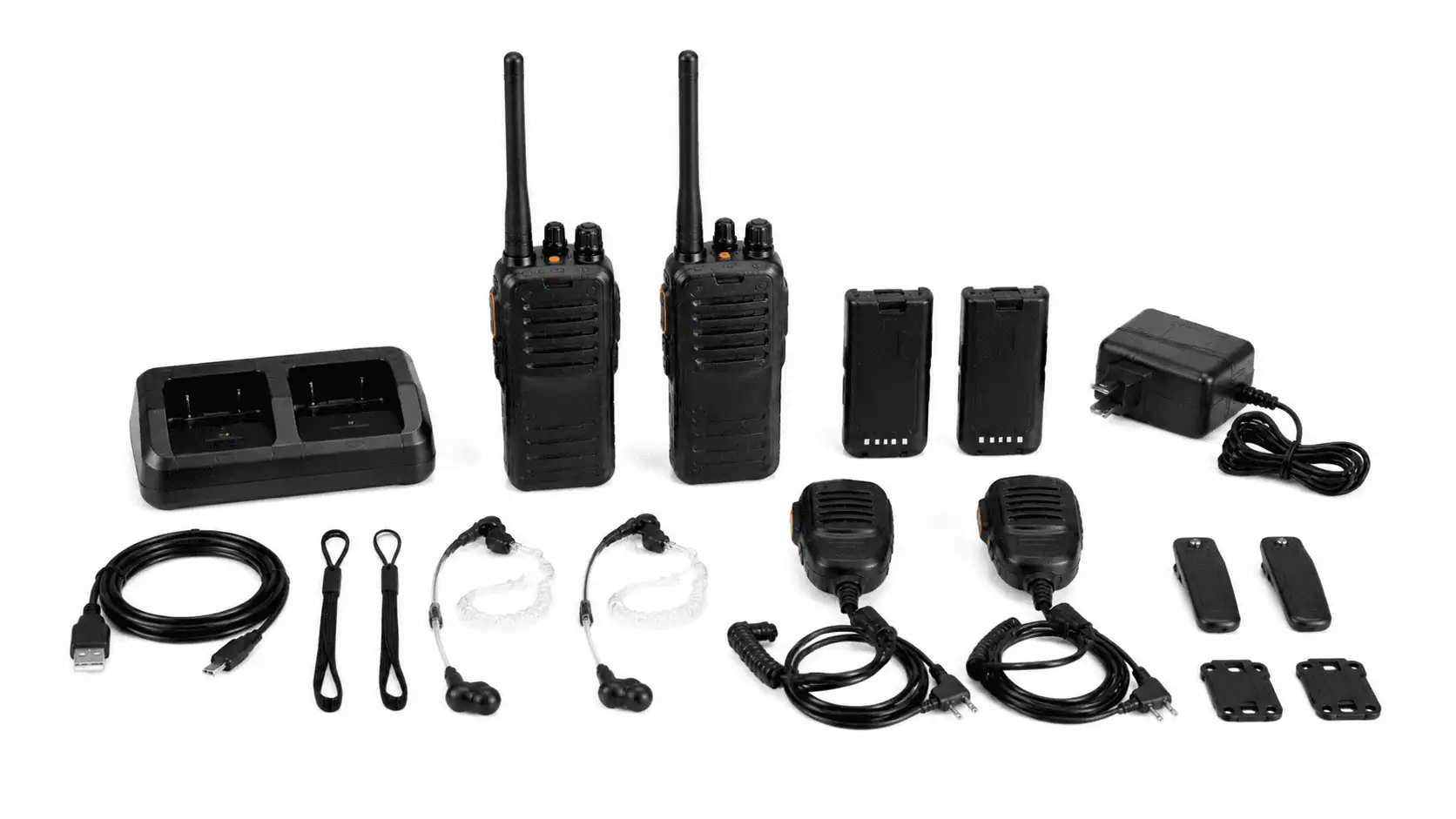
Production Set Requirements
Why Consumer Radios Fall Short on Set
Consumer-grade walkie talkies are built for casual short-range use. Film sets and video production teams need radios that are quiet, discreet, durable and ready for long shooting days.
- Discreet audio: Earpiece compatibility keeps communication private and away from microphones.
- All-day battery life: Shoots may run 10-14 hours or longer.
- Durability: Location work may include dust, rain, outdoor handling and repeated use.
- Reliable coverage: Radios must work across sets, studios, backlots and staging areas.
- Quiet operation: Low-beep or silent settings help reduce disruption during takes.
Key Features to Look For
| Feature | Why It Matters on Set | Buyer Question |
|---|---|---|
| Earpiece support | Keeps calls discreet near actors, cameras and live microphones. | Which connector type does the radio use? |
| Multiple channels | Separates AD team, camera, grip, electric, production and security. | How many channels can be programmed? |
| Long battery life | Covers long shooting days without frequent charging. | Are spare batteries and multi-unit chargers available? |
| Quiet operation | Reduces loud tones that may interfere with filming or audio recording. | Can key beeps and alerts be disabled? |
| Compact body | Makes radios easier to carry on belt, pouch or harness. | What is the radio size and weight? |
| Reliable range | Supports studios, backlots, event venues and outdoor sets. | Should we choose analog, DMR, PoC or repeater support? |
Analog vs DMR
Analog or Digital Radios for Production Crews?
Analog radios are simple, low-cost and fast to deploy, which makes them suitable for smaller shoots, small crews and short-term productions. DMR radios offer clearer digital audio, better group management and more organized department communication, which can be useful for larger production teams.
For most production buyers, the best choice depends on crew size, location size, channel needs, battery plan, accessory compatibility and whether the radios will be reused across future projects.
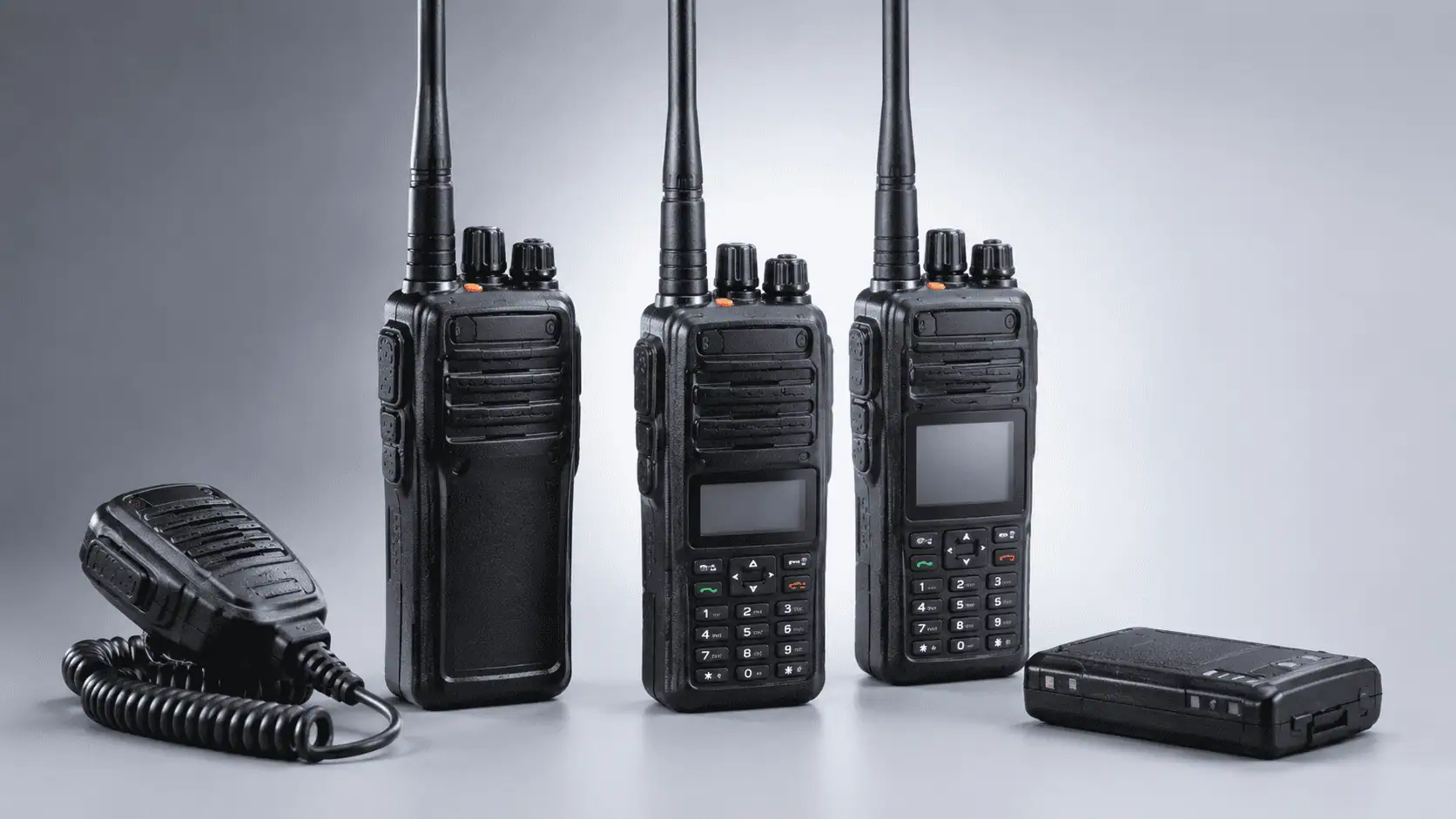
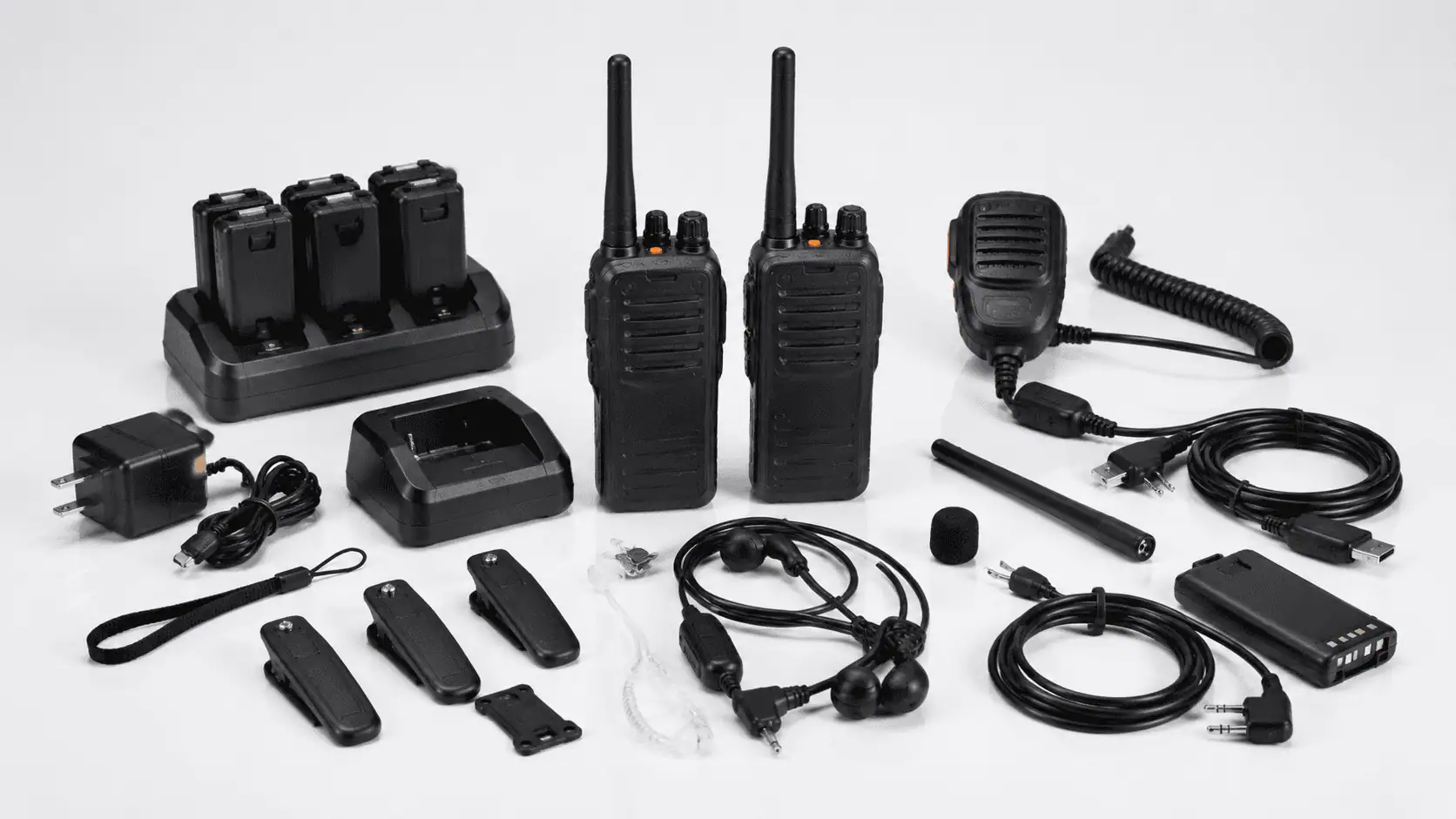
Production Radios Should Be Ordered as Complete Kits
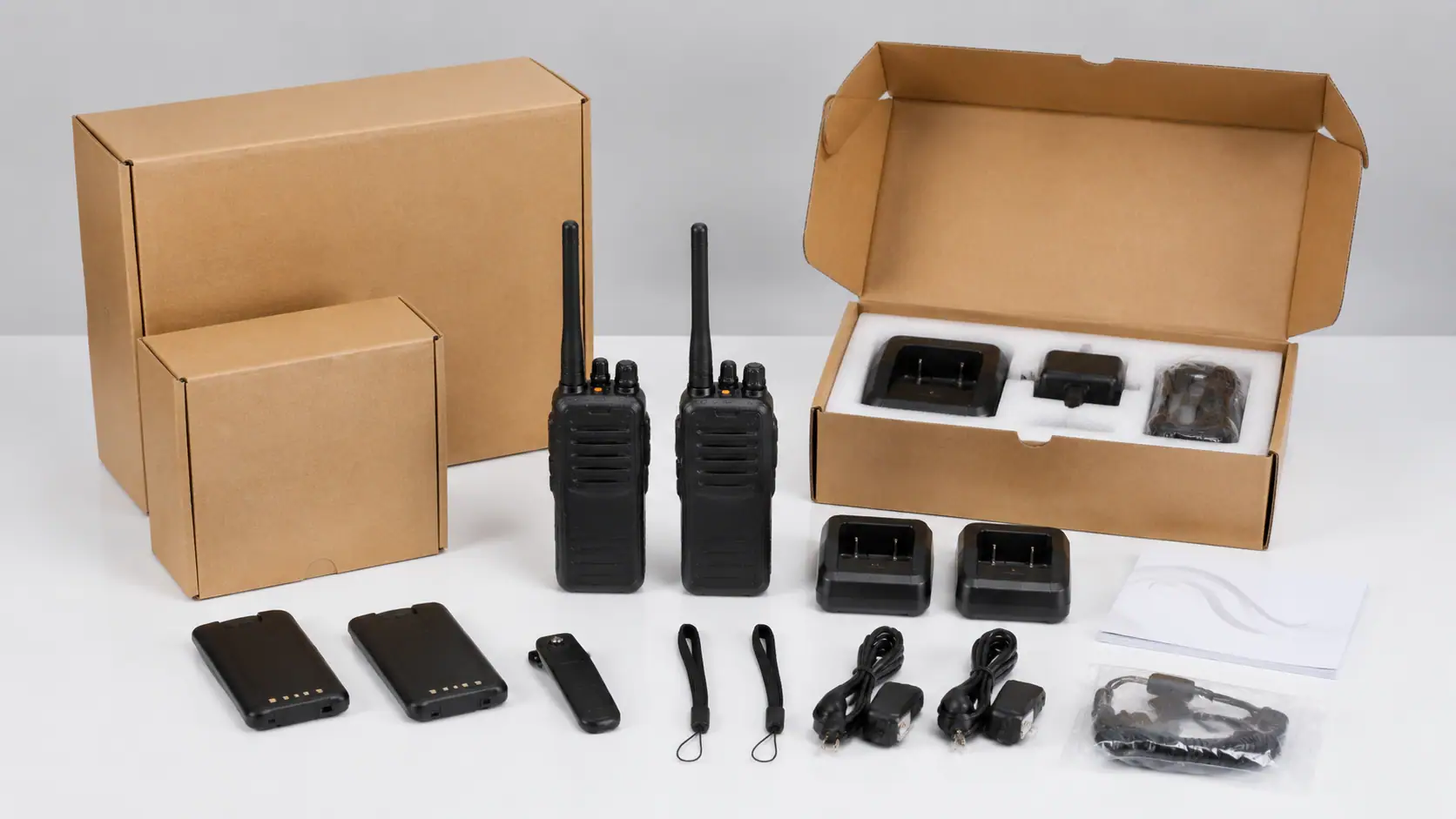
For film crews, the accessory package matters as much as the radio. A practical kit should include radios, discreet earpieces, spare batteries, chargers, belt clips and simple labeling for department use.
Recommended Production Radio Kit
| Item | Purpose | Recommended For |
|---|---|---|
| Two way radio | Main push-to-talk communication device. | AD team, production, camera, grip, electric and security. |
| Discreet earpiece | Keeps calls private and reduces sound leakage. | Users near talent, live microphones or camera. |
| Spare battery | Supports long shooting days and overtime. | 10-14 hour shoots and location work. |
| Multi-unit charger | Keeps a radio fleet organized and ready. | Production offices, rental houses and crew kits. |
| Belt clip or pouch | Makes radios easy to carry while moving around set. | ADs, PAs, camera team and security. |
| Programming cable | Helps preset channels and department groups. | Rental fleets and repeat production use. |
B2B Sourcing
For Production Companies, Rental Houses and Distributors
If you are outfitting a production company or rental fleet, avoid buying random consumer radios one by one. Bulk buyers should consider radio model consistency, accessory compatibility, charging workflow, replacement batteries, channel programming and labeling.
OEM support can include logo printing, custom packaging, channel presets, department labels, accessory bundles and bulk supply for production rental kits.
Buyer Checklist Before Requesting a Quote
| Information to Send | Why It Matters |
|---|---|
| Crew size | Determines radio quantity, spare units and charger needs. |
| Production type | Studio, outdoor, event, film, video or rental fleet may need different setups. |
| Channel groups | Helps plan AD, camera, grip, electric, production and security channels. |
| Shoot duration | Determines battery and spare battery requirements. |
| Location size | Helps choose analog, DMR, long range or repeater-supported radios. |
| Target country | Important for frequency, plug type and documentation support. |
| OEM requirement | Logo, packaging, labels and accessory kits affect quotation. |
Ready to source? See our walkie talkies for events and productions page for models, OEM options and quotation details.
Department Channel Plan for Film Sets
Productions run smoothly when every department knows which channel to use. A clear channel plan stops the camera team from talking over the assistant directors and keeps the main production channel free for important calls. The plan below is a common starting point, adjusted to crew size and the number of channels your radios support.
| Channel | Department / use | Who carries radios | Notes |
|---|---|---|---|
| 1 | Production / main (ADs) | ADs, director’s team, production managers | Keep for cues, rolling calls and key decisions |
| 2 | Camera | Camera operators, ACs, DIT | Lens, battery and setup coordination |
| 3 | Grip and electric | Gaffer, key grip, best boy, crew | Lighting and rigging calls |
| 4 | Locations and transport | Location managers, drivers, unit base | Parking, arrivals, public access |
| 5 | Art, props and wardrobe | Art department, props, costume | Set dressing and continuity |
| 6 | Hair and makeup | HMU team, talent handlers | Talent readiness |
| 7 | Private / one-to-one | Anyone | Side conversations off the main channel |
| 8 | Spare / emergency | Safety officer, medic | Reserved for incidents |
Program channel names into radios where the display allows, and print a small channel card for each crew member. Use radios that let you lock the channel knob for day players who should stay on one channel.
Choose radios with enough channels for all departments plus spares, and confirm local rules first. License-free options such as PMR446 in Europe or FRS in the United States suit small shoots, while larger productions often use licensed business radios for more channels, power and privacy. Our licensed vs license-free guide explains the difference.
Surveillance Earpieces and Headsets on Set
On a film set, a loud radio speaker can ruin a take. Earpieces are therefore standard equipment for most crew, not an optional extra.
- Surveillance (acoustic tube) earpieces: discreet, comfortable for long days, with an inline PTT and mic; common for ADs and production staff
- D-ring or ear-hook earpieces: easy to share and put on quickly; suit crew who remove them often
- Lightweight headsets: better for noisy exteriors, rigging or generator areas
- Remote speaker mics: useful for drivers, locations and unit base where discretion matters less
Earpieces are model-specific because of connector types, so order accessories matched to your radio. Keep spare acoustic tubes and ear pieces, and clean or replace them between productions for hygiene. See our walkie talkie accessories for earpiece and headset options.
Train crew to keep the PTT cable routed under clothing so it does not catch on equipment, and to test their earpiece at the start of every day. A quick radio check on each channel before the first setup catches faulty cables before they cause missed cues.
Productions working near sound-sensitive talent often ask all crew on set to use earpieces only, and keep open speakers for unit base and transport.
Charging Radios on Location
Long shooting days, early calls and remote locations make charging a planning task. A dead radio during a rolling call is avoidable with a simple routine.
- Use multi-unit chargers at unit base or the production office, so a full fleet charges together overnight.
- Carry spare batteries for key crew, charged and labelled, for long days or night shoots.
- Assign a radio coordinator who issues radios, collects them at wrap and puts them on charge.
- Check power sources: on remote locations, chargers may run from a generator or inverter, so confirm the charger’s input requirements.
- Track radios with numbered labels and a sign-out sheet to avoid losses between locations.
Battery endurance depends on the model, battery capacity, transmit time and power setting, so test radios on a real shooting day before buying for a whole crew. Our battery charging guide explains battery care and rotation.
Rough handling on set is normal, so rugged radios with firm belt clips and protected accessory jacks tend to last longer. Label every radio and battery with a number, and keep a small repair kit with spare antennas, belt clips and earpieces at unit base.
Rental vs Buying for Production Companies
Many productions rent radios, but companies with a steady flow of shoots often find that owning a fleet gives more control and lower long-term cost. The right choice depends on how often you shoot and how many radios you need.
| Factor | Renting | Buying |
|---|---|---|
| Upfront cost | Low; pay per production | Higher; purchase of radios and accessories |
| Cost over many shoots | Adds up with frequent use | Usually lower when used regularly |
| Availability | Depends on rental house stock in busy periods | Always available to your team |
| Branding and programming | Standard rental setup | Your own channel plan, labels and logo |
| Maintenance | Handled by the rental house | Your responsibility, including spares |
Rental houses and production equipment companies can also buy direct from a manufacturer for their own fleets. If you are building a rental or production fleet, our OEM walkie talkie buying guide can help you plan models, accessories and branding.
Related Guides
Need radios for events or productions?
Tell us your crew size, venue and dates. We will suggest radios, headsets and a channel plan for your production team.
Get a Quote →Radios for Events & ProductionFAQs
What walkie talkies are best for film production?
The best walkie talkies for film production are lightweight two way radios with discreet earpiece support, long battery life, quiet operation, multiple channels and reliable range.
How many channels does a production crew need?
Small and mid-size shoots often use 3-6 channels, such as AD or production, camera, grip and electric, security and logistics. Larger productions may need more channels or talk groups.
Can walkie talkies be used with discreet earpieces?
Yes. Radios with compatible accessory ports can work with surveillance-style earpieces, which help keep communication private and reduce sound disruption near microphones.
Should production crews use analog or DMR radios?
Analog radios are suitable for smaller shoots because they are simple and cost-effective. DMR radios are better for larger productions that need clearer audio, organized groups and more professional fleet management.
Can you supply OEM walkie talkie kits for production rental fleets?
Yes. OEM support can include radio selection, logo printing, channel programming, accessory bundles, labels, manuals and private label packaging for production companies and rental houses.
How many channels does a film production need on walkie talkies?
A typical setup uses separate channels for production, camera, grip and electric, locations and transport, art and wardrobe, and hair and makeup, plus a private channel and a spare for emergencies. Smaller shoots may combine departments. Check how many channels your radios support and program clear names.
What earpieces are best for film crews?
Surveillance earpieces with acoustic tubes are the most common choice because they are discreet and comfortable over long days. D-ring earpieces suit crew who remove them often, and lightweight headsets work better in noisy exteriors. Accessories are model-specific, so match connectors to your radios.
Should a production company rent or buy walkie talkies?
Renting suits occasional productions with low upfront budgets. Buying usually makes more sense for companies that shoot often, because the fleet is always available and can be programmed and branded for your crew. Compare expected shoot days, fleet size and maintenance capacity before deciding.
Related Guides
Need Walkie Talkies for a Production Crew?
Send your crew size, production type, channel needs, shoot duration, target country and accessory requirement. We can recommend radios, earpieces, batteries, chargers or complete OEM production radio kits.
Email: lorabanzhitao@gmail.com
WhatsApp: +86 173 1689 5054