
Walkie Talkies for Manufacturing & Production Teams
Plan radio communication for production lines, maintenance, warehouses, quality teams and site security. Compare Analog, DMR, PoC, repeaters and accessories around your actual layout, users and working conditions.
Which radio system fits a manufacturing site?
Small, localized teams may start with Analog. Plants with several departments often evaluate DMR and a structured channel plan. Multiple sites may consider PoC where cellular or Wi-Fi service is suitable. Repeaters should be considered only after the building layout and coverage gaps are understood.
Analog Radios
Consider for smaller workshops with simple team structure and limited channel requirements.
DMR Radios
Evaluate for production, maintenance and warehouse teams that need organized digital communication.
PoC / LTE Radios
Useful to assess when teams span multiple facilities and compatible cellular or Wi-Fi coverage is available.
Repeater Systems
Consider when layout review or onsite testing identifies indoor dead zones between working areas.
One radio plan, different factory workflows
A useful system separates teams where needed while keeping escalation paths simple for everyday operations and incidents.
Production
Coordinate line changes, material issues and supervisor calls without leaving the work area.
Maintenance
Receive fault reports and coordinate technicians across machines, utilities and service zones.
Warehouse & QC
Confirm material movement, loading activity and quality exceptions between departments.
Safety & Security
Create clear escalation paths for access control, incidents and cross-department support.
Design around the difficult parts of the facility
Radio selection should reflect how people actually work—not only a headline range or transmitter-power figure.

Noise, PPE & Audio
Evaluate speaker microphones, earpieces and operating controls with the PPE used in each work zone.

Metal & Dead Zones
Share walls, machinery, basements and separate buildings so coverage planning reflects the real site.
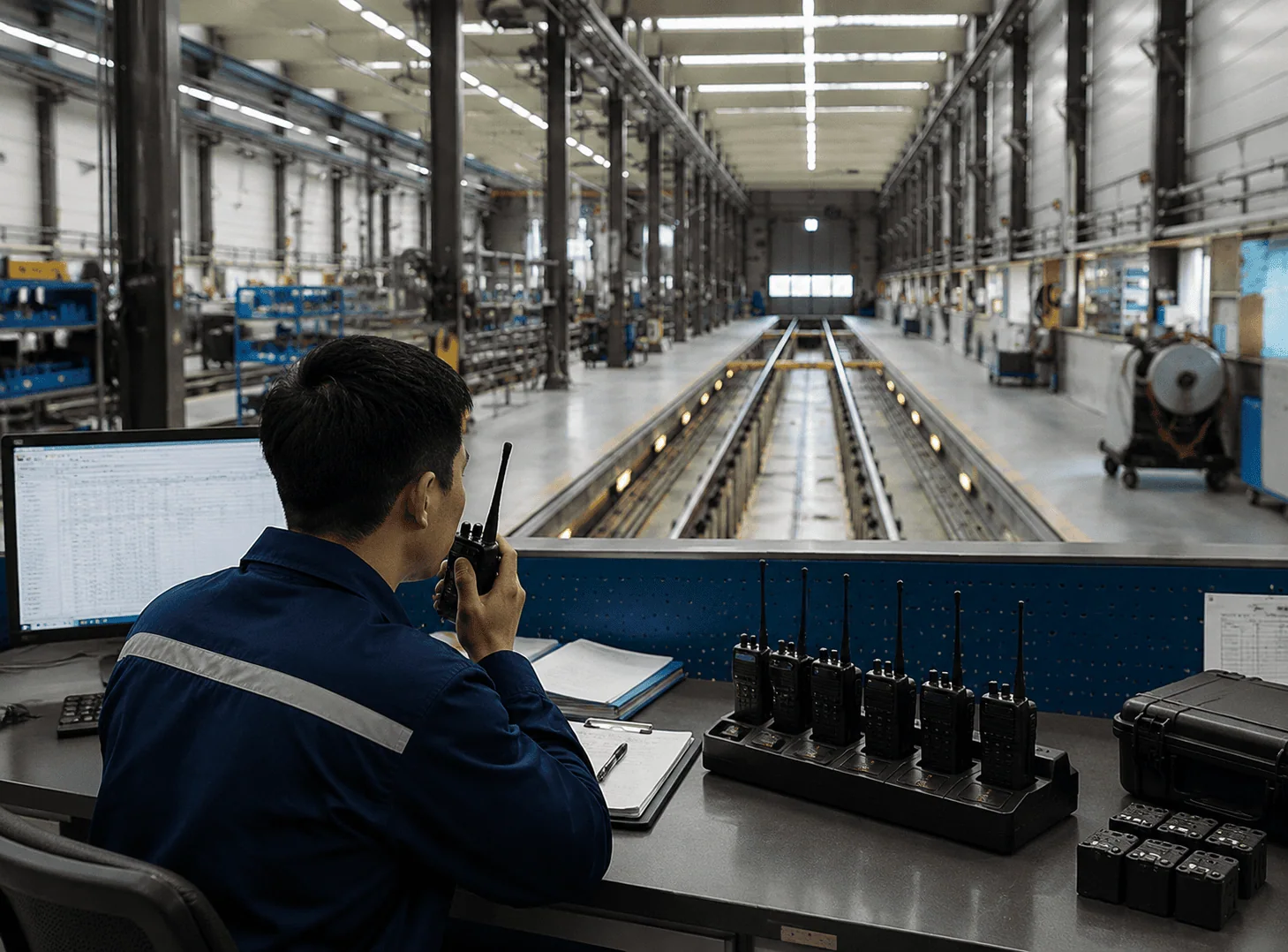
Shifts & Fleet Charging
Match chargers and battery arrangements to shift handover, radio quantity and the selected model.
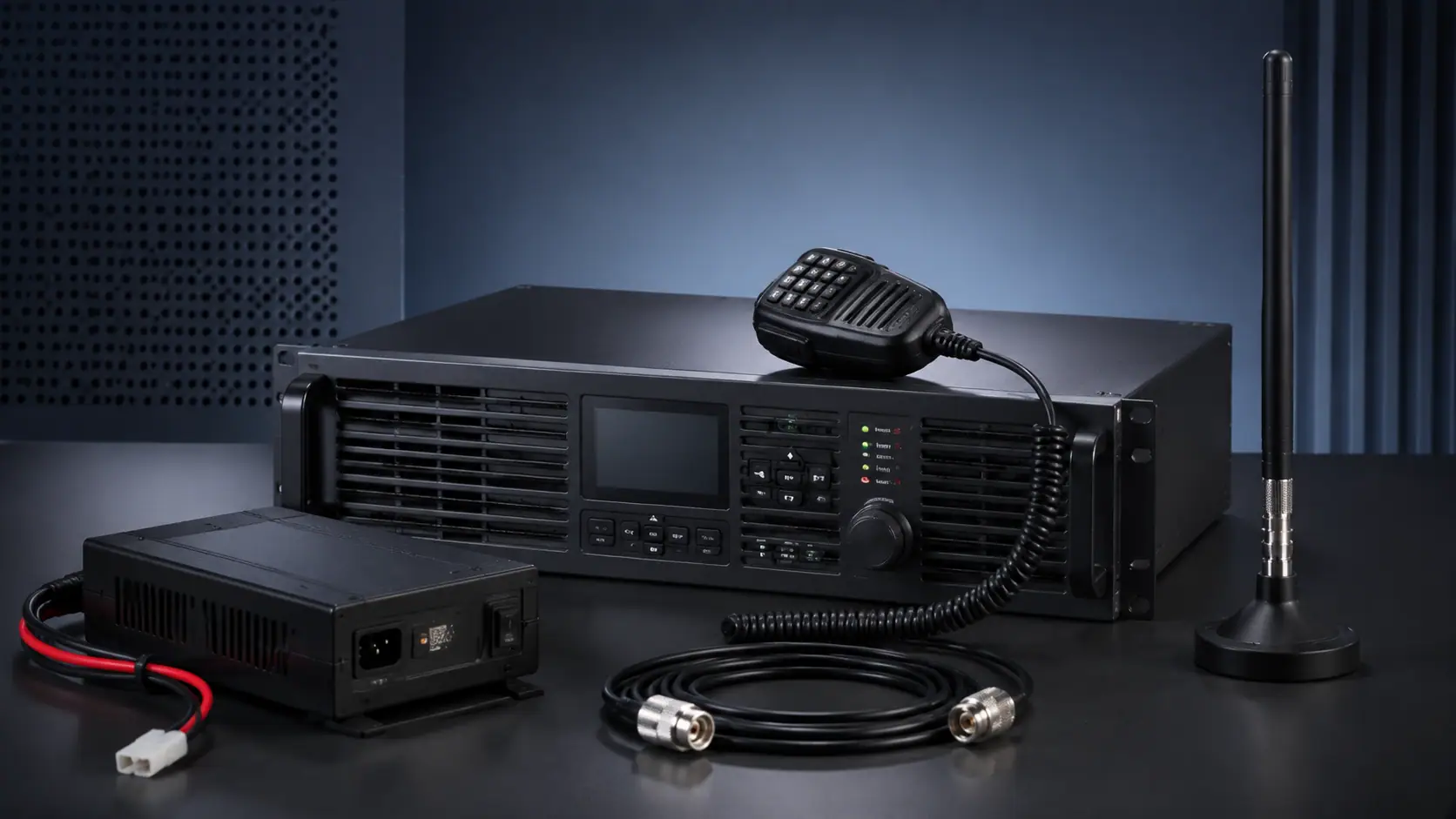
From factory layout to a testable radio plan
The goal is to narrow the architecture before final model, quantity and commercial terms are confirmed.
Share the working layout
Identify production, warehouse, office, outdoor and difficult indoor zones.
Map users and groups
List departments, user quantity, supervisors and emergency escalation needs.
Shortlist the architecture
Compare Analog, DMR, PoC and repeater requirements for the actual workflow.
Test in difficult zones
Use samples or a pilot fleet to evaluate coverage, audio and accessories onsite.
Confirm the project scope
Finalize current model availability, programming, accessories, branding, documentation and quotation.
Explore the radio category that matches your architecture
Use these category pages to compare the available direction, then confirm the exact model against your site and market.
Analog Radios
Review straightforward radio options for localized teams and basic channel plans.
View Analog radiosDMR Radios
Explore digital radio options for department-based communication and system planning.
View DMR radiosPoC Radios
Review LTE and push-to-talk-over-cellular options for distributed operations.
View PoC radiosAccessories
Compare audio, carrying, charging and fleet-support accessories by model.
View accessoriesSend enough detail for a project-specific quotation
A factory radio RFQ is more useful when it explains the environment as well as the quantity.
Test radios where communication is hardest
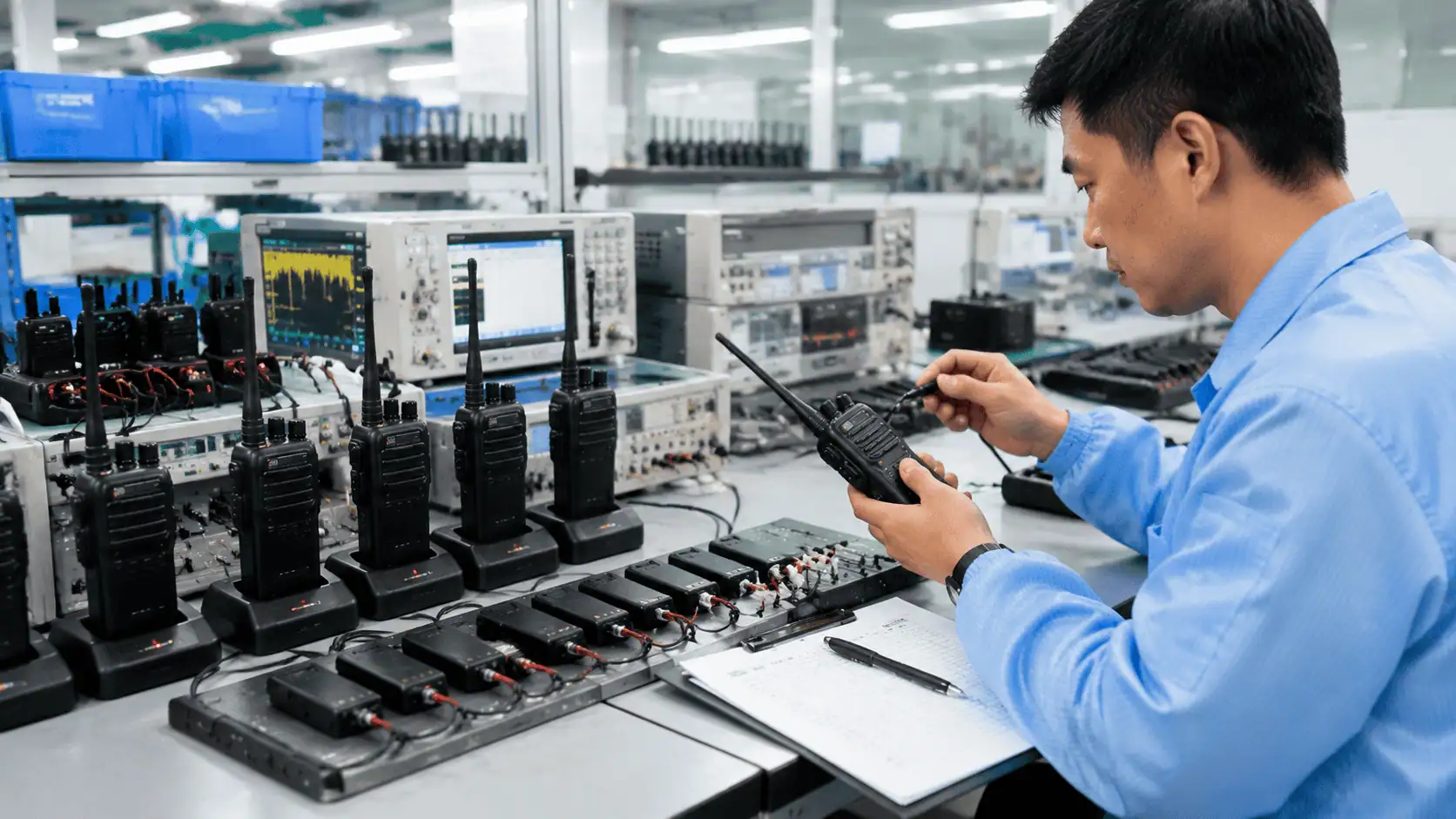
Sample or pilot evaluation should cover the real production environment, not only an office desk test.
- Check audio with machinery running and normal PPE in use.
- Walk the longest route and known indoor problem areas.
- Test buttons, clips, microphones and earpieces with actual users.
- Review charging and handover procedures across the planned shifts.
- Confirm programming and documentation before the bulk project.
Manufacturing walkie talkie FAQs
Which walkie talkie type is best for a manufacturing facility?
There is no single best type for every facility. Analog can suit a smaller and simpler local team; DMR is often evaluated for multi-department plants; PoC can suit distributed sites where network coverage is available. Layout, noise, users, permitted frequencies and current model specifications should decide the final choice.
Does every factory need a radio repeater?
No. A repeater should be considered when the building layout or onsite testing shows coverage gaps that direct radio-to-radio communication cannot reliably address. Separate buildings, reinforced structures and basement areas are useful details to share during planning.
What information is needed for a factory radio recommendation?
Send the site area and layout, number of users, departments, noise and PPE conditions, known dead zones, destination market, accessory needs and whether branding or packaging is required.
Can radios be customized for a distributor or factory project?
Branding, programming, packaging and accessory-bundle options can be reviewed by selected model and project specification. Final availability, artwork requirements and commercial terms should be confirmed in the current quotation.
How should sample radios be tested before a larger order?
Test them during normal operations in the noisiest and most difficult coverage areas. Include representative users, PPE, accessories, charging routines and the intended channel or group structure.
Continue your manufacturing radio evaluation
Walkie Talkies for Noisy Manufacturing Environments
Review audio and accessory considerations for loud work areas.
Read the noise guide →DMR vs Analog vs PoC Sourcing Guide
Compare Analog, DMR and PoC architectures before a factory RFQ.
Compare radio types →Custom Walkie Talkie Ordering Guide
Review the information needed for programming, branding and a custom-radio project.
Open the ordering guide →Best Walkie Talkies for Manufacturing: How to Choose
Compare analog, DMR and PoC/LTE by department, coverage and fleet size.
Read the selection guide →Reliable Walkie Talkies for Large Manufacturing Facilities
Plan repeaters, channels and charging for multi-building and metal-heavy sites.
Plan a large-site system →Factory Walkie Talkies: Radio System & Kit Guide
Quote radios, accessories, chargers and spares as one deployable factory kit.
Build a factory kit →Turn your factory layout into a clearer radio RFQ
Share the site, users, difficult zones, destination market and customization needs. We can use those details to review a suitable radio and system direction.