
DMR Radio Supplier South Africa
Source professional DMR radios, repeaters and accessories for South Africa security companies, mines, warehouses, construction sites, industrial facilities and distributors. Export documentation, CE/FCC/RoHS certificates and OEM packaging provided to support smooth customs clearance in South Africa.
Short answer: South Africa buyers looking for DMR radios should choose a supplier that can provide digital two way radios, repeater compatibility, spare batteries, speaker microphones, antennas, sample testing and OEM support for bulk orders.
DMR radios support clearer digital voice, group communication, privacy options and repeater systems. They are suitable for security, mining, warehouses, manufacturing, construction and large facility communication.Recommended DMR Setups for South Africa
| Application | Recommended Setup | Buyer Notes |
|---|---|---|
| Security teams | DMR radios + earpieces + spare batteries | Suitable for guards, patrol and property security. |
| Mining projects | Rugged DMR radios + speaker microphones | Check environment, safety requirements and coverage needs. |
| Warehouses | DMR radios + chargers + speaker microphones | Useful for aisles, loading docks and supervisors. |
| Large facilities | DMR radios + repeater system | Helps reduce dead zones in complex buildings. |
| Distributors | OEM DMR radio kits | Logo packaging, manuals and accessory bundles available. |
Why Choose DMR Radios for Professional Projects?
DMR radios are a strong choice when buyers need more organized and reliable communication than basic analog radios. They support digital audio, talk groups, privacy options and repeater systems for larger sites. For South Africa security, mining, warehouses and industrial buyers, DMR radios can be quoted with accessories and repeaters to build a complete communication system.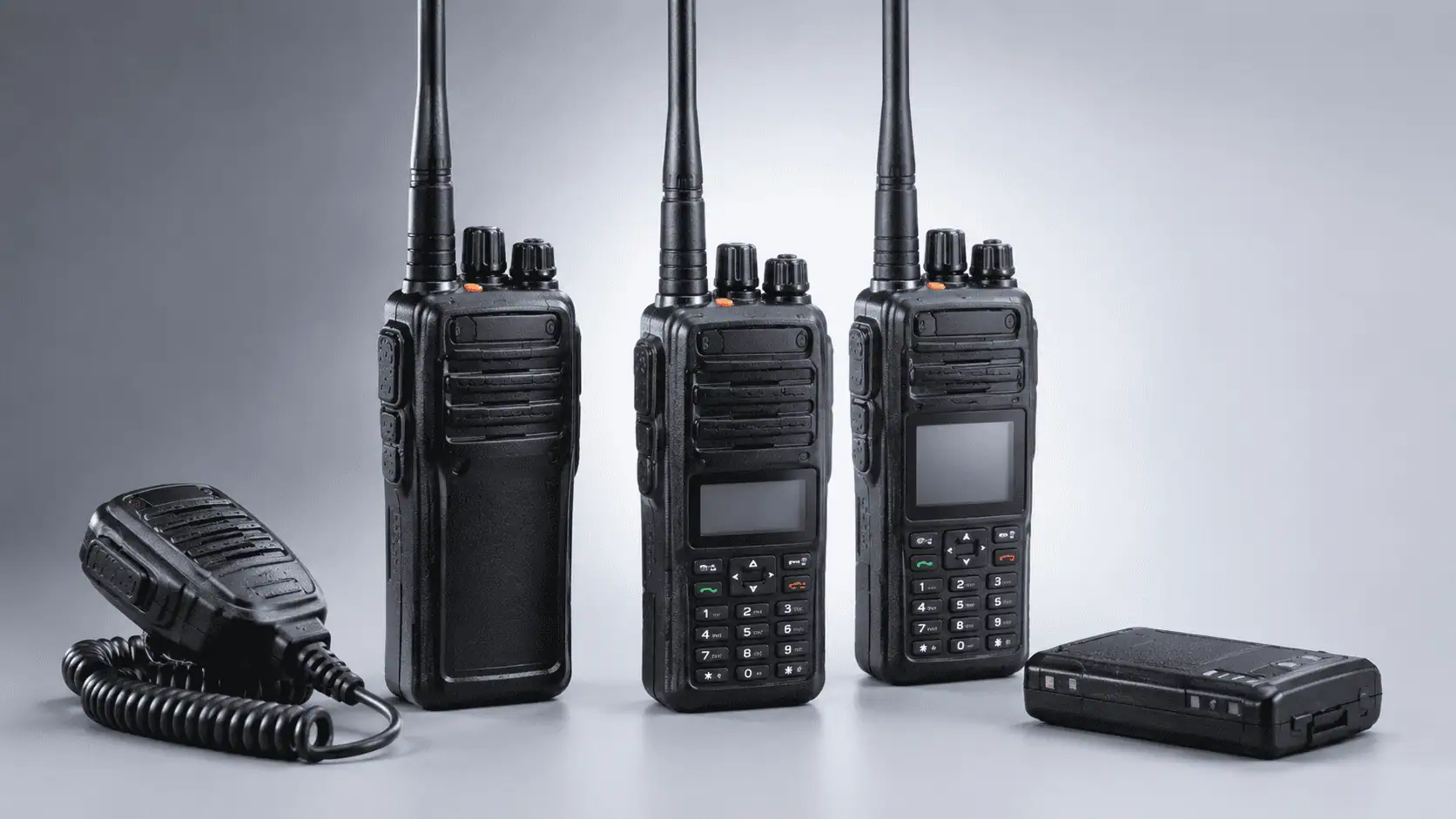
South Africa DMR RFQ Checklist
| Application | Security, mining, warehouse, construction or industrial use may need different models. |
| Quantity | Affects pricing, production time and packaging. |
| Coverage area | Helps decide if repeater support is needed. |
| Accessory list | Speaker microphones, earpieces, batteries and chargers affect kit pricing. |
| Target country | Helps confirm plug type, documentation and shipment planning. |
| OEM requirement | Logo, packaging, manuals and labels affect MOQ and quotation. |
Import & Compliance Notes for South Africa
Two-way radios imported into South Africa are regulated by the Independent Communications Authority of South Africa (ICASA). Before a bulk order, confirm who will hold the local type approval for the exact model, and which frequencies the radios may be programmed to use. CE, FCC and RoHS test reports support an application, but they do not replace ICASA approval.
| Item to Confirm | Why It Matters |
|---|---|
| ICASA type approval for the exact model | Customs and resellers may ask for proof that the radio model is approved for the market. |
| Frequency band and channel programming | Radios should be programmed only to frequencies the end user is permitted to use. |
| Frequency licence for business or DMR systems | Licensed UHF/VHF and repeater systems usually need a spectrum licence held by the operator. |
| Test reports and labels | We supply CE/FCC/RoHS reports, model labels and manuals to support the importer’s application. |
Requirements change, so check the latest rules on the ICASA type approval page or with your customs broker before shipping.
Matching Radios to South African Industries
South African demand comes from mining, private security, agriculture and commercial sites. Each sector values different features, and load-shedding adds a power-planning requirement that many other markets do not face.
| Industry | Typical working conditions | Suggested radio direction |
|---|---|---|
| Mining | Dust, heavy equipment, underground or open-pit areas | Rugged DMR radios; certified intrinsically safe models only where hazardous areas require them |
| Security companies | Armed response, estates, patrols, control rooms | DMR with emergency and lone-worker functions; PoC for wide-area control |
| Farms and agriculture | Open land, long distances, limited mobile coverage | VHF analog or DMR radios, often with repeaters for large properties |
| Warehouses and logistics | Distribution centres, depots, yards | UHF DMR on-site; PoC/LTE for drivers |
| Retail, hospitality and events | Malls, venues, hotels | Compact UHF radios with earpieces and multi-unit chargers |
For mining, the need for intrinsic safety depends on the area classification; confirm it with the mine’s safety team and request the certificate for the exact model. On open farmland, VHF often carries further than UHF; our UHF vs VHF guide explains the difference.
Shipping, Documents and ICASA Type Approval
Most shipments move by sea into Durban or Cape Town, or by air into Johannesburg. Prepare battery and conformity documents before the goods leave the factory.
| Document or item | What it covers | Buyer note |
|---|---|---|
| Commercial invoice | Model numbers, quantities, unit values, HS code proposal, Incoterms | Match descriptions to the conformity documents so customs sees one consistent product name |
| Packing list | Carton count, net and gross weights, carton dimensions, serial or batch ranges | Serial ranges help later warranty and spare-part tracking |
| Battery UN38.3 test summary | Lithium battery transport testing for the battery model shipped | Air and sea forwarders typically ask for it; confirm it matches the actual battery part number |
| Safety data sheet (SDS/MSDS) | Handling information for lithium batteries | Often requested together with UN38.3 documents |
| Conformity documents | Test reports and technical files that may support ICASA type approval and, where applicable, NRCS requirements | Coverage depends on the selected model and destination market; confirm with your importer or broker |
| Bill of lading or air waybill | Shipment evidence for customs clearance | Check consignee details match the importer of record |
Radio equipment in South Africa typically needs ICASA type approval before it is sold or used, and frequency use may need a licence depending on the band and application. Some electrical products may also fall under NRCS compulsory specifications, so check whether chargers or power supplies are affected. Confirm current requirements with ICASA, the NRCS or an experienced local importer. A manufacturer can typically supply test reports, depending on the model.
Clearance at South African ports can take longer when documents are incomplete, so send copies to your clearing agent before the vessel arrives. Make sure the product descriptions on the invoice match the approval documents exactly, including model numbers and any private-label names, and keep the files together for future orders of the same model.
After-Sales, Spares and Load-Shedding Planning
Power cuts affect charging routines. If chargers lose power overnight, radios start the next shift partly charged. Build battery planning into the order.
- Spare batteries: allow at least one spare pack for radios used on long or double shifts.
- Backup charging: consider multi-unit chargers connected to a UPS, inverter or solar backup system; check the charger’s input requirements.
- Vehicle charging: security and farm teams often charge in vehicles, so confirm 12V charger options.
- Accessories: speaker mics and antennas wear quickly in mining and patrol use.
- Programming and repair: keep programming files locally and agree a repair or swap process with your supplier.
See our battery charging guide for 24/7 shifts for rotation methods that also help during load-shedding.
Repeaters and base stations also need backup power during load-shedding. A handheld fleet can keep working on stored battery charge, but if the repeater goes down, range drops sharply. Include the repeater site in the power plan and check how long its backup supply lasts under real traffic. Security control rooms should test a full outage scenario before relying on the system.
Working With South African Distributors and Importers
Many end users buy through a radio dealer that handles ICASA approval, programming and local repair. Security groups and mining contractors sometimes import directly for large fleets.
| Buying route | Best for | Points to check |
|---|---|---|
| Local radio dealer | Most fleets, fast service | Type-approved models, programming, repeater installation |
| Direct import | Large security or mining fleets | Importer of record, approval documents, spares stock |
| OEM supply to distributors | Dealers building their own brand | Logo, packaging, firmware, documentation for approval |
Before committing, review supplier capability with our walkie talkie factory audit checklist.
Related Buying Guides
- DMR Radio Manufacturer
- DMR vs Analog vs PoC Sourcing Guide
- Security Guard Radios: Bulk Buying Guide
- Long Range & Heavy Duty Walkie Talkies
- Walkie Talkie Factory Audit Checklist
Other markets we supply: UAE · Saudi Arabia · Philippines
DMR Radio Supplier South Africa FAQ
Are DMR radios better than analog radios?
DMR radios are usually better for professional projects because they support clearer digital audio, group communication and repeater compatibility.Do DMR radios need repeaters?
Small sites may not need repeaters. Large buildings, mines, warehouses and complex facilities may need repeaters for better coverage.Can you supply OEM DMR radios for South Africa distributors?
Yes. OEM support can include logo printing, private label packaging, manuals, labels, carton marks and accessory bundles.Do DMR radios need ICASA approval in South Africa?
Yes. Radio equipment sold in South Africa needs ICASA type approval, and licensed business frequencies require a spectrum licence from ICASA held by the operator. We supply test reports and documents to support the importer’s type approval application.
Will a DMR system keep working during load shedding?
Handheld radios run on batteries, so they keep working during power cuts as long as batteries are charged. Repeaters and chargers need mains power, so plan a UPS or battery backup for repeater sites and keep spare charged batteries for each shift.
What is the difference between DMR Tier I and Tier II?
DMR Tier I is designed for low-power, licence-free use on 446 MHz where permitted. DMR Tier II is the professional conventional standard used on licensed UHF and VHF frequencies, supports two time slots per channel and works with repeaters. Most South African business projects use Tier II.
Do two-way radios need ICASA approval in South Africa?
Radio equipment typically needs ICASA type approval before it is sold or used in South Africa, and some frequencies also require a licence. Chargers or power supplies may fall under NRCS requirements where applicable. Rules change, so confirm current requirements with ICASA, the NRCS or an experienced local importer before ordering.
How should radio fleets plan for load-shedding?
Plan spare batteries for each busy shift, connect multi-unit chargers to a UPS, inverter or solar backup system, and consider vehicle chargers for mobile teams. Charge radios when power is available rather than waiting for the end of shift. Test backup systems with the real charger load before relying on them.
Is DMR or analog better for South African farms?
Both can work. VHF radios often cover open farmland better than UHF, and DMR adds clearer audio, better battery efficiency and features such as private calls. Analog can be simpler and easier to mix with existing radios. Large farms may need a repeater. Test samples across the property before ordering.