
Two Way Radio Parts Guide
Walkie Talkie Parts Explained: Two-Way Radio Components & Replacement Parts
Learn the main parts of a walkie talkie, how they work, and how to source compatible batteries, antennas, chargers, earpieces, speaker microphones and OEM radio kits.
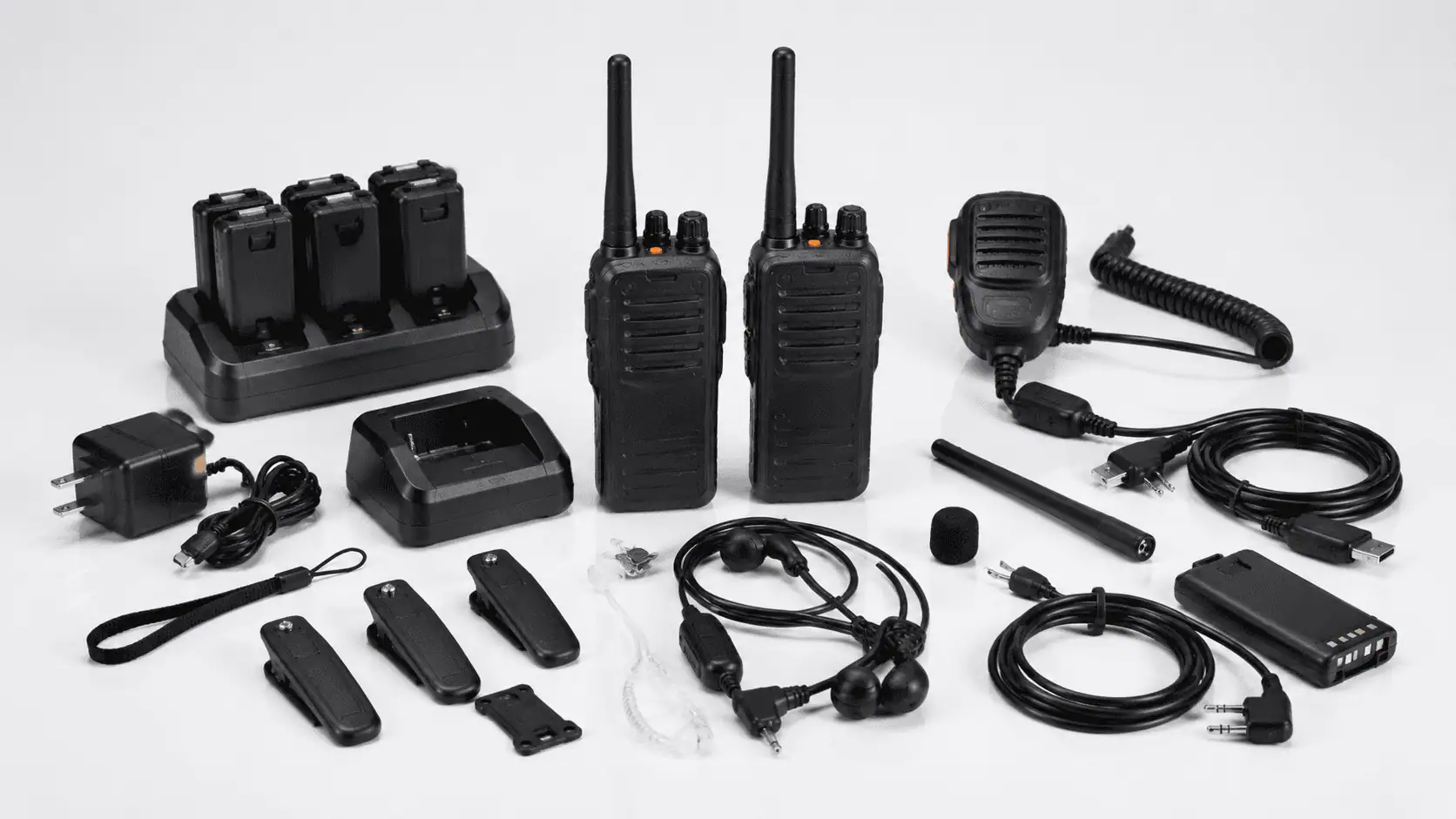
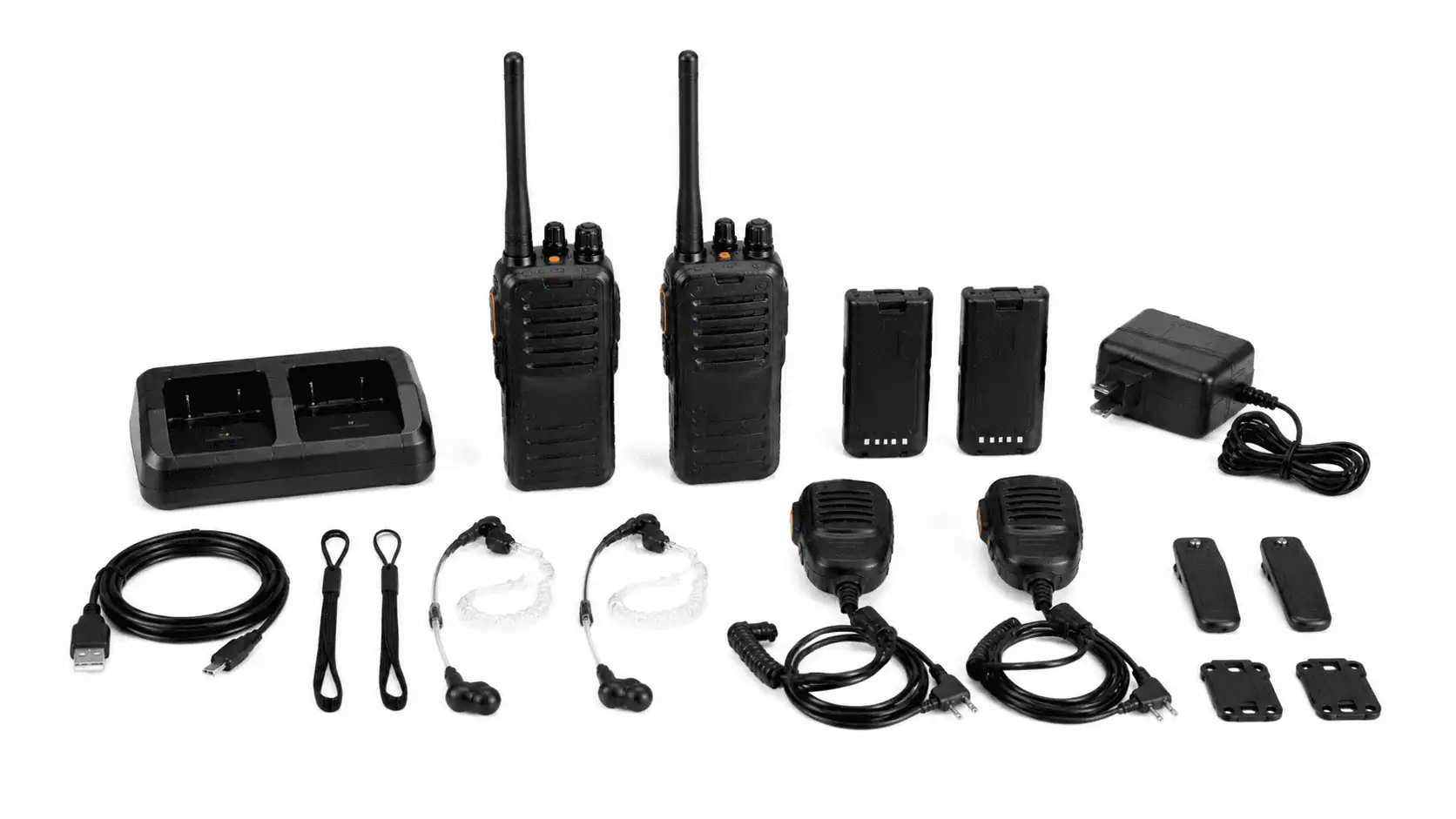
Short answer: The main parts of a walkie talkie include the antenna, PTT button, speaker, microphone, channel knob, volume knob, battery pack, accessory port, circuit board, belt clip and outer housing. For buyers, the most important replacement parts are usually batteries, antennas, chargers, earpieces, speaker microphones, belt clips and programming cables.
Knowing walkie talkie parts names helps distributors, fleet managers, technicians and project buyers order compatible spare parts, reduce radio downtime and build complete two-way radio kits for resale or industrial use.
Walkie Talkie Parts Names: Quick Reference
| Part Name | Main Function | Buyer Checkpoint |
|---|---|---|
| Antenna | Transmits and receives radio signals. | Check VHF/UHF band and connector type. |
| PTT Button | Push-to-talk button used to transmit voice. | Check button durability and glove usability. |
| Speaker | Outputs received audio. | Check volume and clarity for noisy sites. |
| Microphone | Captures the user’s voice. | Check audio quality and accessory options. |
| Channel Knob | Switches channels or talk groups. | Check programmed channel quantity. |
| Volume Knob | Turns the radio on and adjusts audio volume. | Check knob strength and daily wear. |
| Battery Pack | Powers the radio during operation. | Check capacity, voltage and compatibility. |
| Accessory Port | Connects earpieces, speaker microphones and cables. | Check connector type before ordering accessories. |
| Outer Housing | Protects the internal electronics. | Check material, sealing and durability. |
Replacement Parts
Where Each Walkie Talkie Part Is Located
Whether you are writing a user manual, training staff or ordering spare parts, it helps to use the standard names for each part of a walkie talkie. The table below lists the external parts found on most handheld two-way radios, where they are located and what each one does. Layouts vary by model, so check the manual for your exact radio.
| Part name | Typical location | Function |
|---|---|---|
| Antenna | Top of the radio | Sends and receives radio signals; must match the radio’s frequency band |
| PTT (push-to-talk) button | Left side | Press and hold to transmit; release to listen |
| Channel selector knob | Top | Switches between programmed channels or groups |
| Volume / power knob | Top | Turns the radio on and off and adjusts speaker volume |
| Speaker | Front, behind the grille | Plays received audio |
| Microphone | Front, usually near the speaker | Picks up the user’s voice when transmitting |
| LCD display | Front, upper area (on display models) | Shows channel, battery level, signal and menus |
| Keypad | Front, below the display (on keypad models) | Menu navigation, entering numbers, contact selection |
| Battery pack | Back of the radio | Rechargeable power source, usually lithium-ion |
| Belt clip | Back, attached to the battery or housing | Holds the radio on a belt or strap |
| Accessory jack | Side, often behind a rubber cover | Connects earpieces, speaker mics and programming cables |
| LED indicator | Top or front | Shows transmit, receive, charging or low battery status |
| Side buttons (programmable) | Side, near the PTT | Monitor, scan, emergency or other assigned functions |
| Emergency button | Top, often colored (on some models) | Sends an alarm to other radios or a dispatcher |
Display-free models skip the LCD and keypad and rely on voice prompts and a simple channel knob. These are popular in hotels, retail and warehouses because they are easy to use and harder to misconfigure. Keypad models suit supervisors and users who need contacts, text messages or menu settings.
Internal Parts of a Walkie Talkie
Inside the housing, a small number of electronic modules do the work of turning speech into radio signals and back. Knowing these parts helps when discussing quality, repairs or OEM specifications with a manufacturer.
| Internal part | What it does | Why it matters for buyers |
|---|---|---|
| Main PCB (circuit board) | Connects and controls all components | Board layout and soldering quality affect reliability |
| RF module (transceiver) | Generates the transmit signal and processes received signals | Determines receiver sensitivity and signal quality |
| Power amplifier (PA) | Boosts the transmit signal to the antenna | Affects output power, heat and battery drain |
| Oscillator / frequency synthesizer | Keeps the radio on the correct frequency | Stability affects clear communication and compliance |
| Audio amplifier and codec | Processes voice; on DMR, converts audio to digital | Affects loudness and clarity |
| Microcontroller and firmware | Runs menus, channels and features | Controls programming options and updates |
| Battery contacts and charging circuit | Manage power and charging | Poor contacts cause resets or charging faults |
For a full view of how these parts work together, see how walkie talkies work.
Parts names for OEM and spare-part orders
When ordering spare parts or discussing OEM changes, use the manufacturer’s part names and model numbers rather than general descriptions. Housing, front panel, rear case, knob caps, PTT rubber and battery latch are separate items in most spare-part lists. Sending a photo with each part circled and named avoids errors, especially when the same radio family has several housing versions. For private label orders, housing color, front panel printing and knob colors are the parts most often customised; see our OEM walkie talkie buying guide for details.
Common Failures by Part
Most walkie talkie repairs involve a small group of parts that take the most wear. Tracking failures by part helps you stock the right spares and give clear feedback to your supplier.
- Antenna: bent, loose or snapped antennas reduce range; replace with an antenna made for the same band
- PTT button: heavy daily use can wear the switch or seal, causing intermittent transmit
- Knobs: channel and volume knobs can loosen or break if radios are dropped or carried by the antenna
- Battery: capacity drops with age and charge cycles; swollen or damaged batteries should be removed from use
- Accessory jack: dust, water or repeated plugging can cause poor contact with earpieces
- Speaker and microphone: water or debris can muffle audio; check the grille and seals
- Belt clip: plastic clips can crack; spare clips are a common reorder item
- LCD: impact can crack the display or cause missing segments
Reducing part failures
Train users not to carry radios by the antenna, keep accessory jack covers closed, and use multi-unit chargers that suit the battery type. When buying in bulk, ask the manufacturer which spare parts they can supply for the model and for how long. Our accessories supplier page covers replacement batteries, antennas and belt clips, and the battery charging guide for 24/7 shifts explains how to extend battery life.
Most Common Walkie Talkie Replacement Parts
For commercial radio fleets, the most frequently replaced parts are batteries, antennas, belt clips, chargers, earpieces and speaker microphones. These parts are exposed to daily use, drops, charging cycles, cable pulling and harsh working environments.
If you manage radios for factories, warehouses, hotels, security teams or construction sites, keeping standard spare parts in stock can reduce downtime and make maintenance easier.
Replacement Parts and Accessories Buyers Usually Need
| Part / Accessory | Why Buyers Need It | Information Needed for Quotation |
|---|---|---|
| Battery pack | Batteries lose capacity after repeated charging cycles. | Radio model, voltage, capacity and quantity. |
| Charger | Single and multi-unit chargers support daily fleet operation. | Radio model, plug type, country and quantity. |
| Antenna | Damaged or mismatched antennas affect communication range. | Frequency band, connector type and radio model. |
| Earpiece | Useful for security, hotels, events and noisy areas. | Connector type, use case and quantity. |
| Speaker microphone | Improves usability for supervisors, workers and field teams. | Connector type, radio model and work environment. |
| Belt clip / holster | Common wear part for daily carrying. | Radio model and quantity. |
| Programming cable | Used for channel and frequency programming. | Radio model, software requirement and connector type. |
Compatibility Comes Before Price
Before ordering walkie talkie parts, confirm the radio model, connector type, battery structure, voltage, frequency band and target country. A low-cost part is not useful if it does not fit the radio fleet.
B2B Sourcing
Why Part Standardization Matters for Bulk Buyers
For distributors, system integrators and fleet managers, standardizing walkie talkie parts can reduce purchasing complexity and improve after-sales support. Using the same battery type, charger type, antenna connector and accessory connector makes future replacement easier.
- Shared batteries reduce downtime between departments.
- Unified charger types make shift handover easier.
- Standard accessory ports simplify earpiece and speaker microphone purchasing.
- Common antennas, belt clips and cables reduce spare part inventory cost.

OEM Radio Parts and Private Label Support
Accessory Bundles
Radio kits can include batteries, chargers, earpieces, speaker microphones, antennas, belt clips and programming cables.
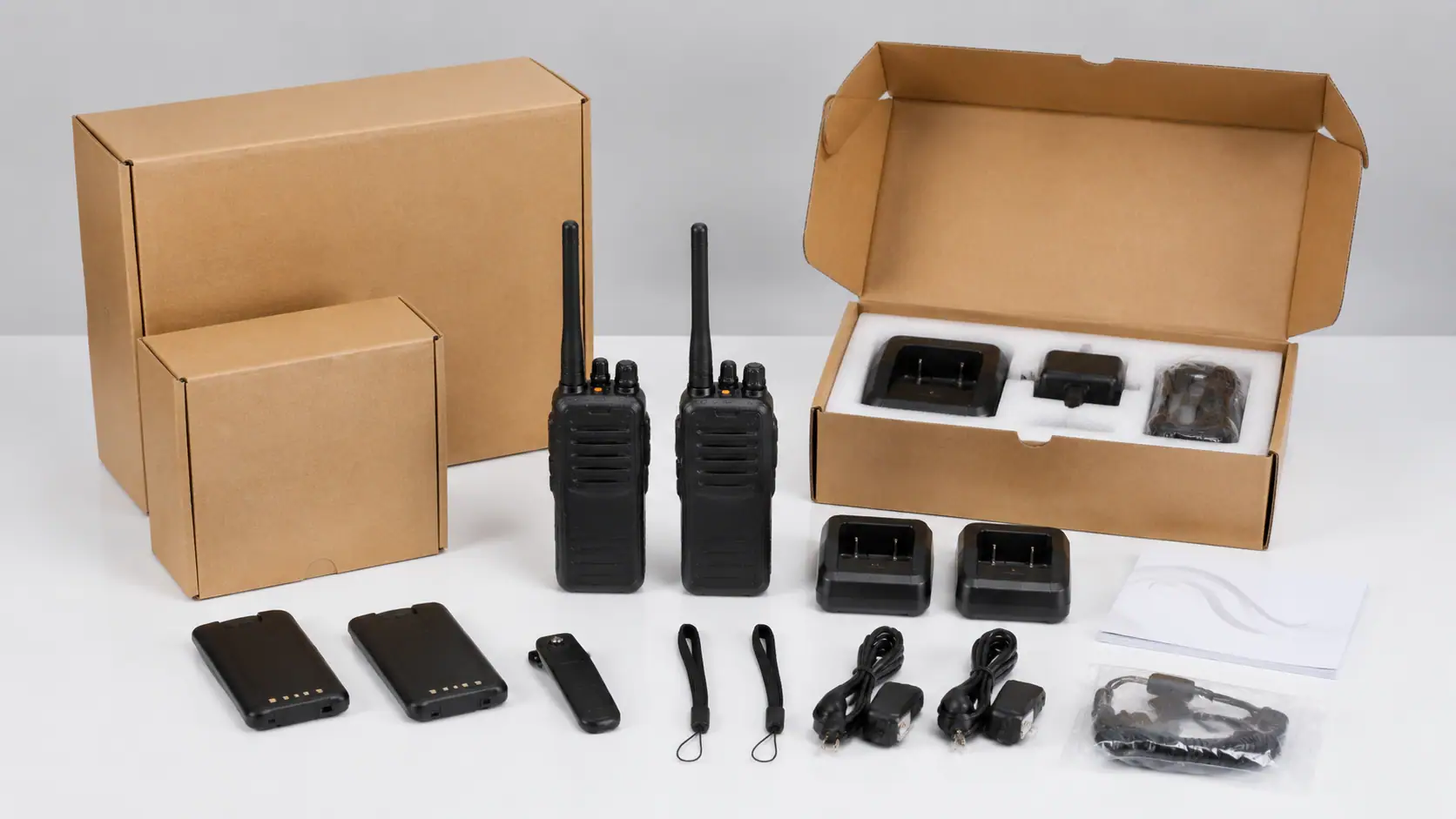
Private Label Packaging
Packaging, labels, manuals and carton marks can be prepared for distributors and brand owners.
Model Matching
We can help match accessories and replacement parts for analog radios, DMR radios, PoC radios, LTE radios and 4G walkie talkies.
Quote Preparation
What to Send Before Requesting Parts
For accurate quotation, please send the radio model, product photo, connector photo, part name, quantity, target country and packaging requirement. If you are not sure about compatibility, send clear photos of the radio front, side accessory port, battery back label and antenna connector.
Buyer Checklist for Walkie Talkie Parts
| Information to Send | Why It Matters |
|---|---|
| Radio model number | Most parts depend on exact radio model compatibility. |
| Part name or product photo | Helps identify whether you need battery, charger, antenna, earpiece or cable. |
| Connector photo | Important for earpieces, speaker microphones and programming cables. |
| Battery label photo | Helps confirm voltage, capacity and battery structure. |
| Frequency band | Important for antenna matching. |
| Quantity | Affects unit price, packaging and shipping plan. |
| Target country | Helps confirm charger plug type, packaging and documentation needs. |
| OEM requirement | Logo, labels, packaging and manuals affect quotation. |
Walkie Talkie Parts FAQ
What are the main parts of a walkie talkie?
The main walkie talkie parts include the antenna, PTT button, speaker, microphone, channel knob, volume knob, battery pack, accessory port, PCB, outer housing and belt clip.
Which walkie talkie parts are replaced most often?
Batteries, chargers, antennas, belt clips, earpieces and speaker microphones are the most commonly replaced parts because they are used daily and exposed to wear.
How do I know which battery fits my radio?
Please send the radio model and a clear photo of the battery label. Battery compatibility depends on shape, voltage, contact position and capacity.
How do I choose the right antenna?
Choose an antenna by matching the radio model, connector type and frequency band. A wrong antenna may reduce communication performance.
Can you supply OEM walkie talkie parts and accessories?
Yes. We can support accessory bundles, private label packaging, labels, manuals and bulk supply for distributors and project buyers.
What are the main parts of a walkie talkie called?
The main external parts are the antenna, PTT button, channel knob, volume and power knob, speaker, microphone, battery pack, belt clip, accessory jack and LED indicator. Many models also have an LCD display, keypad, programmable side buttons and an emergency button. Layout varies by model.
Which walkie talkie part fails most often?
Batteries, antennas, PTT buttons, knobs and belt clips are the parts most often replaced, because they take the most daily wear. Accessory jacks can also suffer from dust or water. Stocking these spares and training users to handle radios correctly reduces downtime.
What is the RF module in a walkie talkie?
The RF module, or transceiver, creates the signal the radio transmits and processes the signals it receives. Working with the power amplifier and frequency synthesizer, it largely decides receiver sensitivity, signal quality and whether the radio stays on the correct frequency. Its quality varies between models and manufacturers.
Related Guides
Need Walkie Talkie Parts or OEM Accessory Kits?
Send your radio model, part name, connector photo, quantity, target country and packaging requirement. We can recommend compatible batteries, chargers, antennas, earpieces, speaker microphones, programming cables or complete accessory bundles.
Email: lorabanzhitao@gmail.com
WhatsApp: +86 173 1689 5054