
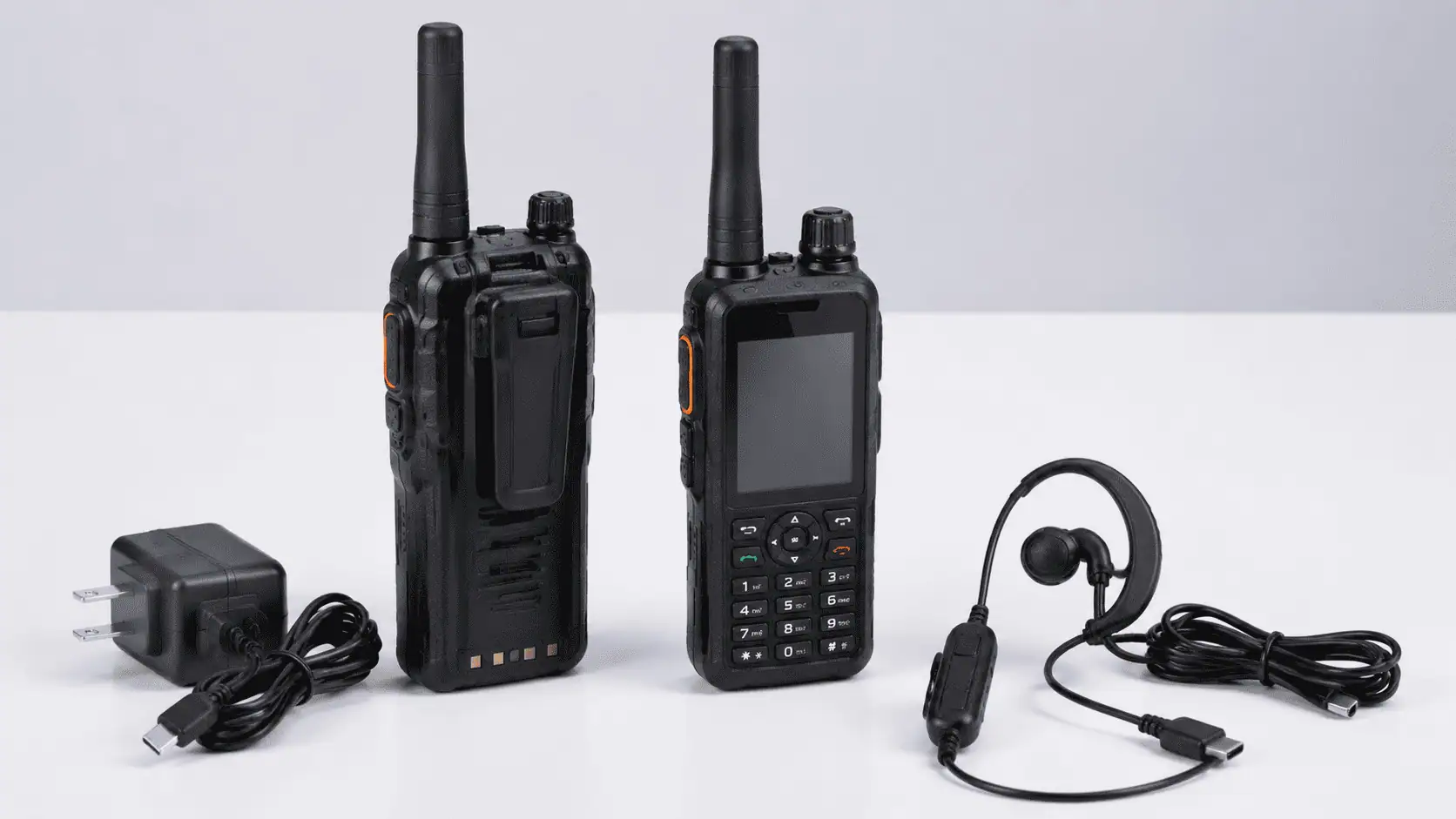
4G Push-to-Talk Radio Guide
What Is a 4G PTT Radio?
Learn how 4G PTT radios work, when to choose cellular walkie talkies, and how to source OEM 4G radios for logistics, security, construction and field teams.
Short answer: A 4G PTT radio is a push-to-talk communication device that uses 4G LTE cellular networks instead of traditional radio frequencies. It gives business teams the instant voice communication of a walkie talkie with the wide-area coverage of a mobile network.
4G PTT radios are also called cellular walkie talkies, network radios, PoC radios or LTE walkie talkies. They are commonly used by logistics fleets, security companies, construction teams, property management, field service teams and multi-site business operations.
4G PTT Radio Quick Summary
| Question | Answer |
|---|---|
| What network does it use? | 4G LTE cellular network, and some models also support Wi-Fi. |
| Does it need a SIM card? | Usually yes. Most 4G PTT radios need a SIM card or mobile data plan. |
| What is the range? | Coverage depends on cellular network availability, not local radio distance. |
| Who uses it? | Logistics, security, construction, transportation, field service and multi-site teams. |
| Is it the same as a PoC radio? | Yes, many 4G PTT radios are also called PoC radios or LTE walkie talkies. |
| Best for | Wide-area push-to-talk communication, GPS tracking and dispatch management. |
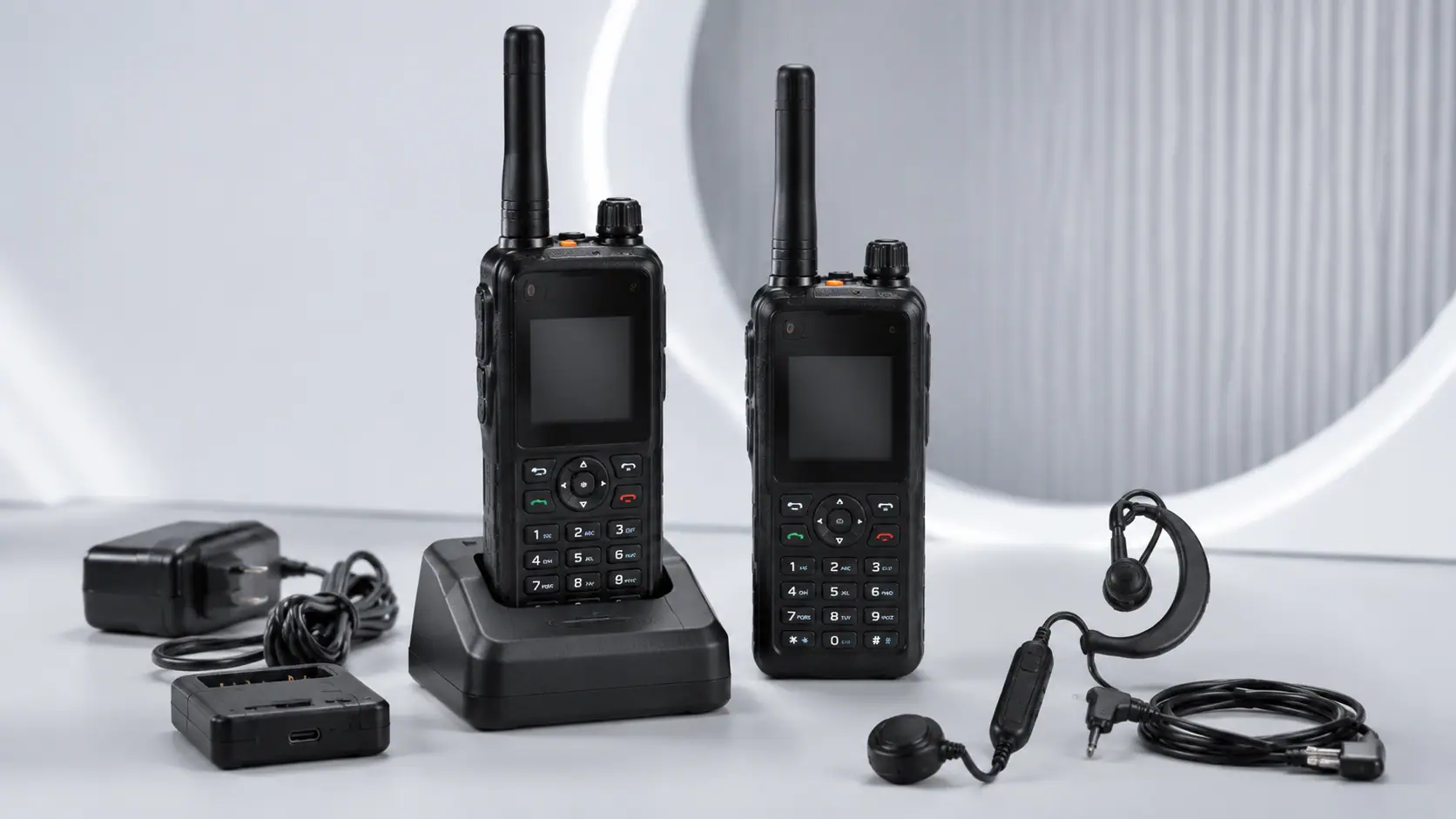
How It Works
How Does a 4G PTT Radio Work?
A 4G PTT radio combines the simple push-to-talk button of a traditional walkie talkie with cellular network and cloud platform technology. The user presses the PTT button, and the voice message is transmitted through the 4G LTE network to an individual user or a group.
- 4G LTE connection: Provides wide-area communication where cellular coverage is available.
- PTT button: Allows instant voice transmission without dialing a phone call.
- Dispatch platform: Manages groups, users, permissions and broadcasts.
- GPS module: Supports location tracking for fleets and field teams.
4G PTT Radio vs Traditional Walkie Talkie
| Feature | Traditional Walkie Talkie | 4G PTT Radio |
|---|---|---|
| Communication method | Radio frequency | 4G LTE cellular network |
| Coverage | Local range, extendable with repeaters | Wide-area coverage where cellular network is available |
| SIM card | Not required | Usually required |
| GPS tracking | Usually not included in basic models | Commonly supported |
| Group management | Basic channels or talk groups | Cloud platform groups, users and dispatch |
| Best for | Factories, hotels, warehouses, local security | Logistics, mobile teams, city patrol, multi-site operations |
| Main limitation | Limited range without repeater | Depends on cellular coverage and data service |
Key Features
What Features Should Buyers Check?
For distributors and project buyers, a 4G PTT radio should be evaluated as both hardware and platform. The radio body, battery, antenna, speaker, SIM support, LTE bands and dispatch platform all affect daily performance.
- LTE band compatibility: Confirm the device supports the 4G bands used in your target country.
- Battery life: Match battery capacity to real shift length and standby time.
- Audio quality: Check speaker volume, microphone clarity and accessory compatibility.
- GPS and dispatch: Confirm whether tracking, groups, permissions and history are supported.
- Rugged design: Choose suitable housing for construction, logistics or field work.
- OEM options: Confirm logo, packaging, platform branding and accessory bundles.
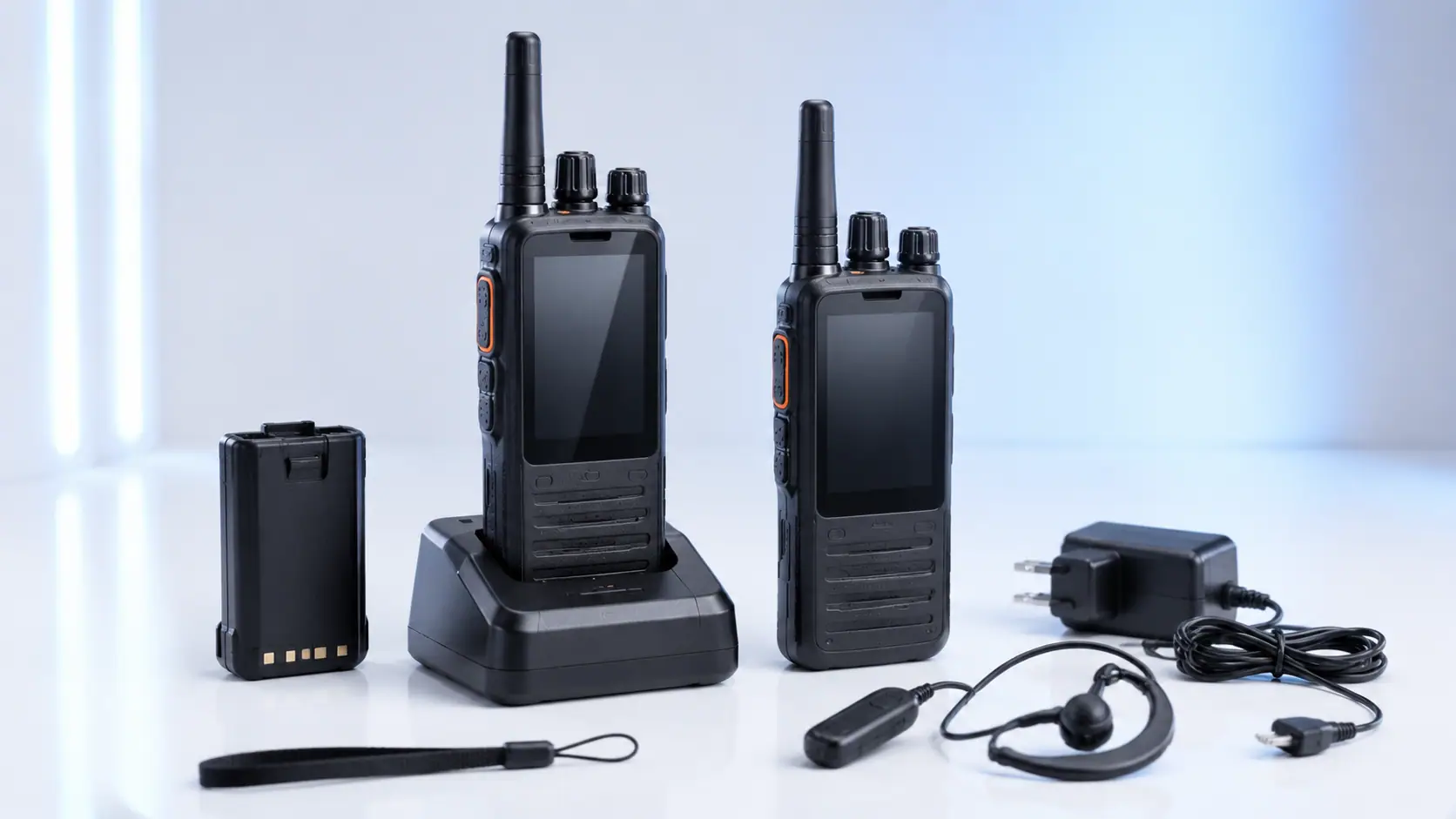
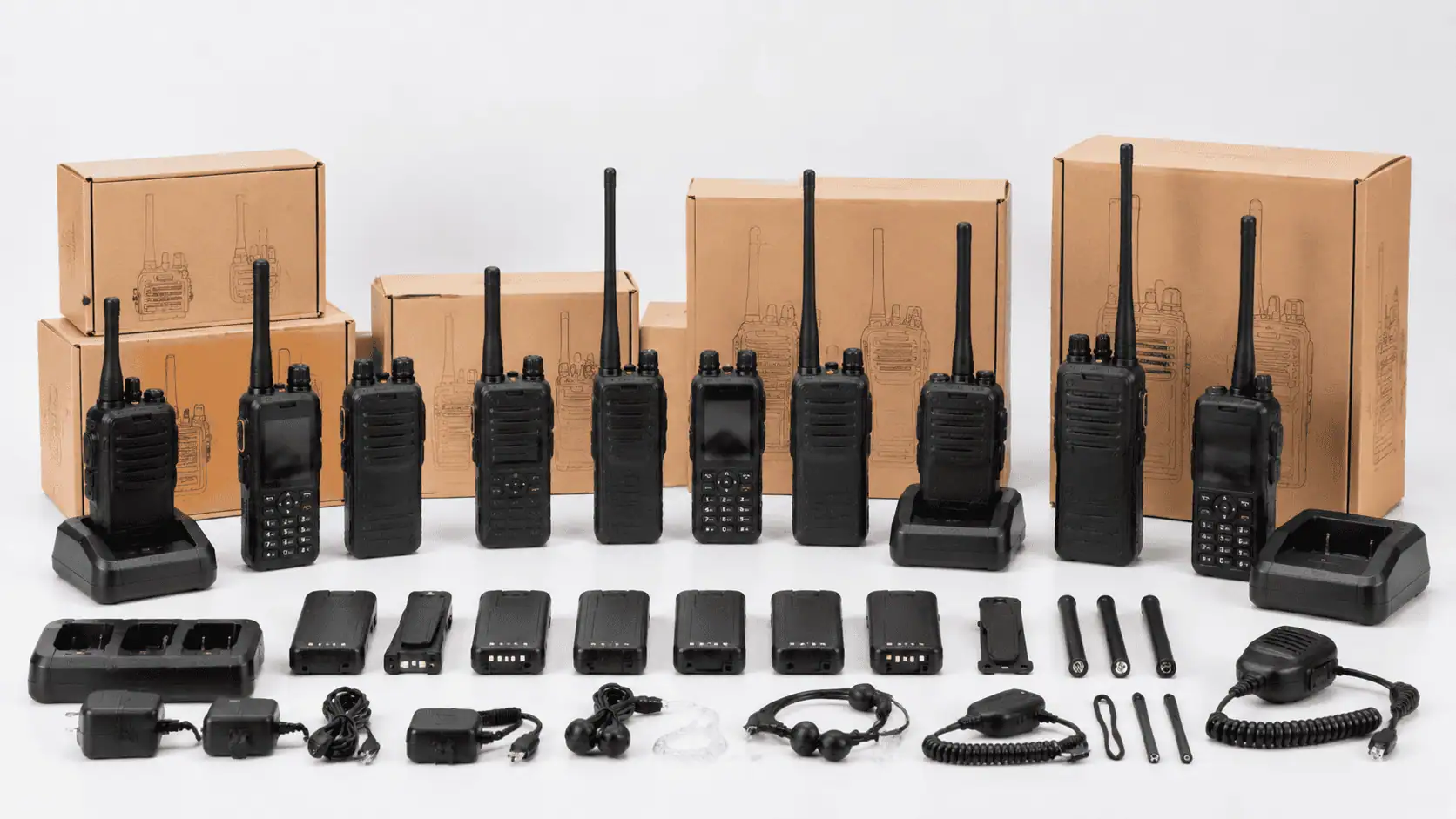
The Range of a Phone Call, the Speed of a Walkie Talkie
4G PTT radios are valuable when teams need instant push-to-talk communication across long distances without building repeater infrastructure. They are especially useful for mobile workers, vehicle fleets and multi-site business teams.
Where 4G PTT Radios Are Used
| Industry | Use Case | Recommended Setup |
|---|---|---|
| Logistics and delivery | Driver dispatch, route coordination, delivery updates and emergency support. | 4G PTT radios + GPS dispatch platform + car chargers. |
| Security companies | City patrol, property patrol, incident reporting and multi-site guards. | PoC radios + earpieces + dispatcher groups. |
| Construction teams | Large project sites, remote teams and contractor coordination. | Rugged 4G radios + spare batteries + group management. |
| Property management | Maintenance, security, parking, cleaning and mobile service teams. | LTE walkie talkies + GPS tracking + department groups. |
| Field service | Technicians working across different customer locations. | 4G PTT radios + dispatch platform + charging kits. |
OEM and ODM Supply
4G PTT Radio OEM for Distributors and Brands
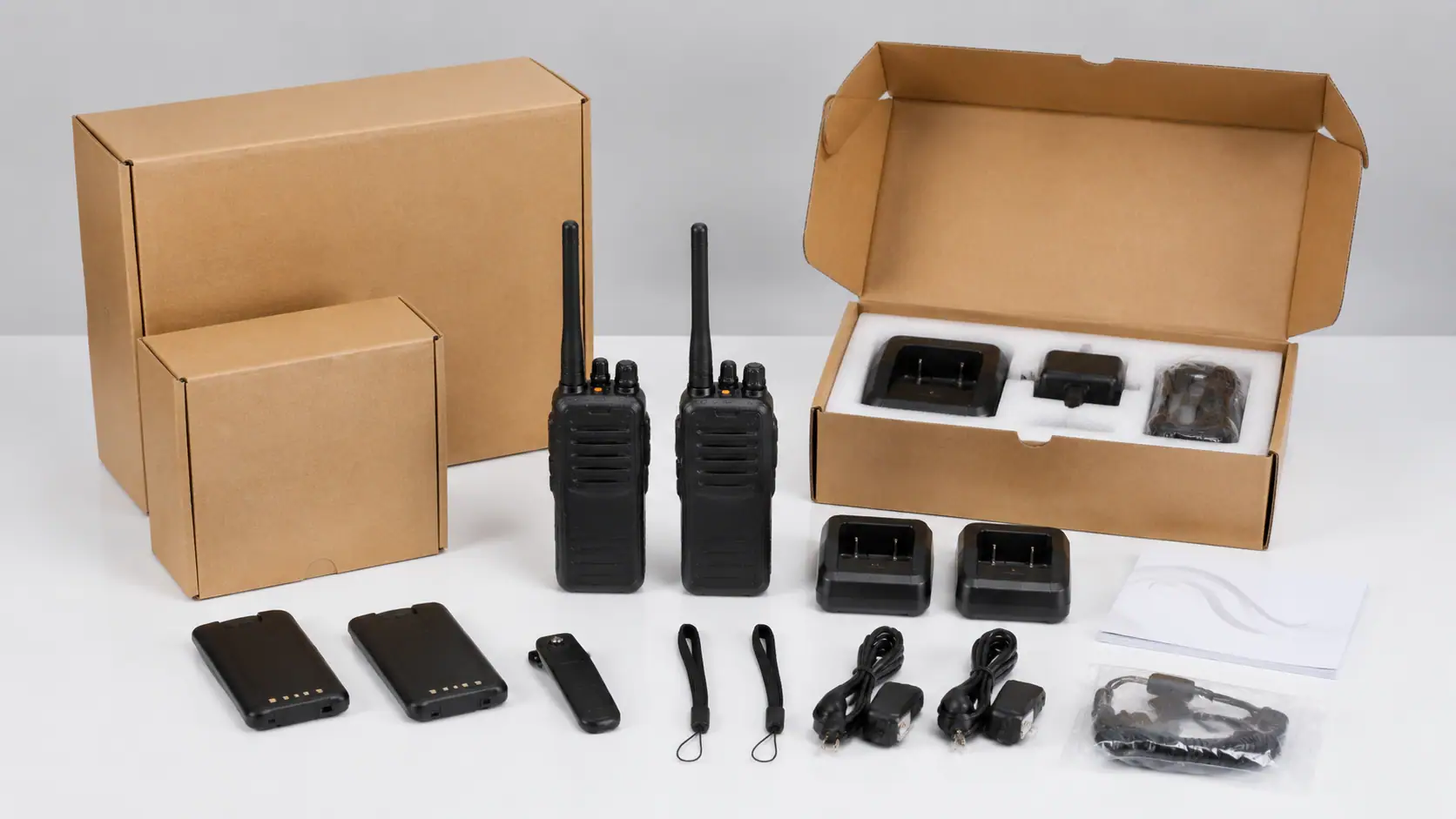
For distributors, importers and industry buyers, OEM support can include logo printing, private label packaging, software or platform branding, accessory bundles, user manuals, carton marks and bulk order production.
Before ordering, confirm the target country, required LTE bands, SIM card type, language, platform requirement, accessory bundle and packaging style.
Buyer Checklist Before Requesting a Quote
| Information to Send | Why It Matters |
|---|---|
| Target country | Helps confirm LTE bands, SIM support, plug type and documentation needs. |
| Application | Logistics, security, construction or field service may need different hardware. |
| User quantity | Affects device quantity, platform accounts, charger plan and pricing. |
| Coverage area | Helps decide whether 4G PTT, DMR or mixed solution is better. |
| Platform requirement | GPS tracking, dispatch, groups and admin controls may vary by solution. |
| Accessories needed | Earpieces, chargers, car chargers and spare batteries affect the full kit price. |
| OEM requirement | Logo, packaging, platform branding and manuals affect quotation and MOQ. |
Ready to source? See our 4G walkie talkie manufacturing page for models, OEM options and quotation details.
Coverage and SIM Planning by Country
A 4G PTT radio is only as good as the mobile network it connects to. Before ordering for a new market, buyers and distributors should check which LTE bands local carriers use, how coverage looks along real work routes and how SIM cards will be supplied and managed.
| Planning item | What to check | Why it matters |
|---|---|---|
| LTE band support | Compare the radio’s supported bands with local carriers’ bands | A radio missing key bands may have weak or no service |
| Fallback networks | Whether the radio supports 3G/2G fallback and whether those networks still operate locally | Some countries have shut down older networks |
| Carrier coverage | Coverage maps plus field tests on routes, basements and remote sites | Maps can overstate indoor and rural coverage |
| SIM type and supply | Local SIMs, roaming or multi-network IoT SIMs | Affects cost, coverage and cross-border use |
| SIM registration rules | Local ID and registration requirements for business SIMs | Delays can hold up deployment |
| Roaming | Whether radios cross borders during work | Roaming costs and permissions vary by carrier |
Band support depends on the model, so share the destination country with the manufacturer at the quote stage. For a regional example, see our page on walkie talkie supply in the UAE.
Run a field test before committing a customer to a platform. Put two or three sample radios on the chosen SIMs and use them on real routes for several days, recording call setup time, audio quality and any dropouts. Indoor sites such as warehouses, car parks and hospitals deserve special attention, because mobile signal indoors can be much weaker than outdoor maps suggest. Share results with the customer so expectations are clear from the start.
Consider the full lifecycle too. Carriers change plans, retire networks and update SIM rules, so distributors should review SIM arrangements with customers every year and keep spare SIMs ready for replacements.
Dispatch Console Features
The dispatch console is where 4G PTT systems show their biggest advantage over conventional radios. For many B2B customers, the console is the reason they choose PoC in the first place. Feature sets depend on the platform, so confirm each item before quoting it to a customer.
| Feature | What it does | Typical users |
|---|---|---|
| Group management | Create, edit and assign talk groups remotely | All fleets |
| Live GPS map | Shows radio locations on a map | Logistics, security, field service |
| Call recording and playback | Stores voice traffic for review | Security, incident management, compliance |
| Individual and broadcast calls | Talk to one user or all groups at once | Supervisors and control rooms |
| SOS / emergency alerts | Receives alarms with location | Lone workers, security patrols |
| Geofencing | Alerts when radios enter or leave areas | Fleets, guarding, site management |
| Messaging, images or video | Sends text or media to users (model dependent) | Field teams, incident reporting |
When selling to customers, show the console in a live demonstration rather than a feature list. Seeing their own vehicles or guards on a map, or replaying a recorded incident, usually explains the value better than any specification sheet.
Also agree who can access recordings and location history, and how long data is kept, since privacy rules for employee tracking differ between countries.
4G PTT vs DMR vs Analog
Customers often ask distributors which technology to choose. The comparison below keeps it practical; each option has a clear place.
| Factor | 4G PTT (PoC) | DMR | Analog |
|---|---|---|---|
| Coverage | Wherever mobile coverage exists | Local site; extended by repeaters | Local site; extended by repeaters |
| Recurring costs | Data plans and platform licenses | Low, apart from licensing where required | Low, apart from licensing where required |
| Network dependence | Depends on the carrier | Independent | Independent |
| Features | GPS, recording, dispatch, messaging | Digital voice, IDs, text, some GPS | Basic voice |
| Best fit | Multi-site and wide-area fleets | Busy sites needing capacity and features | Simple, low-cost site use |
For more detail, read our DMR vs analog vs PoC guide.
Many customers end up with a mix. A factory might keep DMR on site while giving drivers 4G PTT radios, linked through a gateway. Distributors who can supply and support both technologies are better placed to win these projects.
Distributor Business Model: Hardware Plus Service
4G PTT changes how distributors earn. Instead of a one-time hardware sale, the distributor can build recurring revenue from licenses, SIM management and support.
- Hardware margin: radios and accessories sold at project start and for expansions
- License resale: annual or monthly platform licenses per user, where the platform allows resale
- SIM and data management: supplying and managing SIMs, if local rules and carrier agreements allow
- Setup and training: programming groups, configuring the console and training dispatchers
- Support contracts: repairs, replacements and help desk services
Ask the manufacturer whether you get a reseller or sub-account on the platform, how license renewals are handled and whether you can brand the console. Our PoC radio manufacturing team can discuss distributor programs; please contact us with your market and customer types.
Related Guides
Planning a PoC or 4G radio fleet?
Tell us the countries, network needs and fleet size. We will recommend suitable PoC/LTE models, explain platform options and arrange samples for testing before you order.
Get a Quote →View PoC & 4G Radios4G PTT Radio FAQ
Does a 4G PTT radio need a SIM card?
Yes. Most 4G PTT radios need an active SIM card or mobile data service because they communicate through the cellular network.
What is the real range of a 4G PTT radio?
The range depends on cellular coverage. If the network has stable 4G signal, users can communicate across cities, regions or even different countries depending on platform support.
Is a 4G PTT radio the same as a PoC radio?
They are closely related. Many 4G PTT radios are PoC radios because they use push-to-talk over cellular networks.
Can 4G PTT radios work without Wi-Fi?
Yes. They can work through mobile cellular networks. Some models also support Wi-Fi, but Wi-Fi is not always required.
Can you supply OEM 4G PTT radios?
Yes. OEM support can include logo printing, private label packaging, platform branding, manuals, accessory bundles and bulk supply for distributors and project buyers.
Will a 4G PTT radio work in any country?
Not always. It needs to support the LTE bands used by local carriers, and older fallback networks may be switched off in some countries. Check band support against local carriers, test coverage on real routes and confirm SIM registration rules before ordering. Band support depends on the specific model.
What features does a PoC dispatch console usually include?
Common features include talk group management, live GPS maps, call recording and playback, individual and broadcast calls, SOS alerts, and geofencing. Some platforms add messaging, images or video. Features vary by platform and license type, so confirm the exact list with the manufacturer before quoting customers.
How do distributors make money from 4G PTT radios?
Beyond hardware margin, distributors can earn recurring income from platform license resale, SIM and data management where permitted, setup and training, and support contracts. Ask the manufacturer about reseller accounts, license renewal handling and console branding options before committing to a platform.
Related Guides
Need OEM 4G PTT Radios?
Send your target country, LTE band requirement, application, user quantity, platform needs, accessories and OEM packaging requirement. We can recommend 4G PTT radios, PoC radios, LTE walkie talkies or complete radio kits.
Email: lorabanzhitao@gmail.com
WhatsApp: +86 173 1689 5054