
Buyer Guide
PoC Radio vs Traditional Walkie Talkie: Which Is Better for Business Communication?
Compare PoC radios, LTE walkie talkies, cellular walkie talkies and traditional two way radios before choosing a communication system for logistics, security, factories, hotels or warehouses.
Short answer: A traditional walkie talkie uses radio frequencies for local push-to-talk communication, while a PoC radio uses cellular networks such as 4G/LTE or Wi-Fi for wide-area push-to-talk communication. If your team works inside one site, traditional analog or DMR radios are often better. If your team works across cities, routes or multiple branches, PoC radios may be a better choice.
This guide is written for business buyers, distributors and project teams choosing between PoC radios, LTE walkie talkies, network radios, cellular walkie talkies and traditional two way radios.
Fast Decision Summary
| Choose PoC Radio If | Choose Traditional Walkie Talkie If |
|---|---|
| Your team works across cities, routes, branches or multiple job sites. | Your team mainly works inside one building, factory, hotel, warehouse or local site. |
| You need GPS tracking, dispatch platform, group management or remote user control. | You need simple instant voice communication without SIM cards or platform fees. |
| 4G/LTE or Wi-Fi coverage is stable in the working area. | Cellular coverage is weak, restricted or not allowed on site. |
| You can manage SIM cards, data plans, user accounts and platform service. | You prefer lower operating complexity after the radios are configured. |
Traditional Walkie Talkie
Best for Local Site Communication
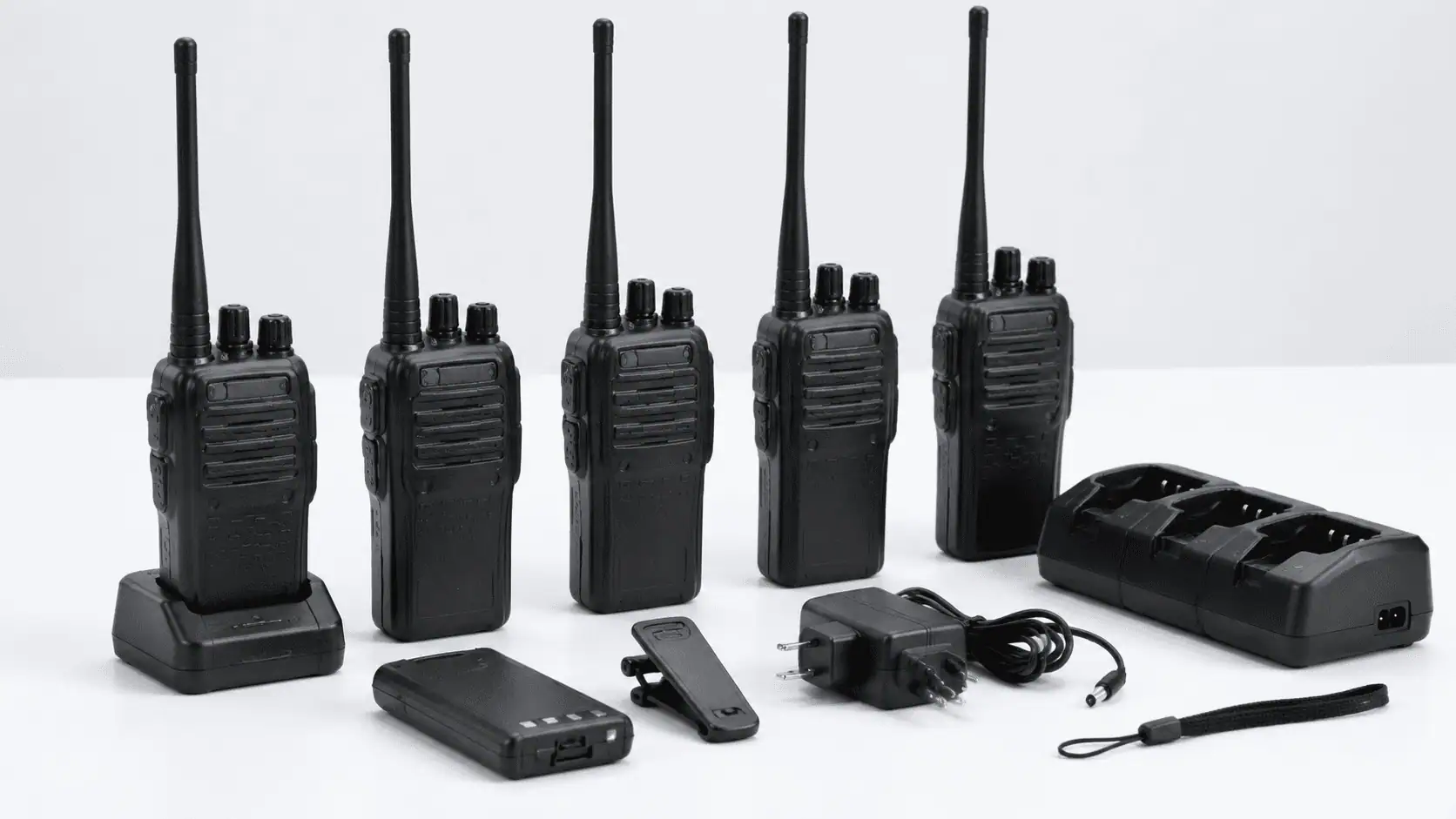
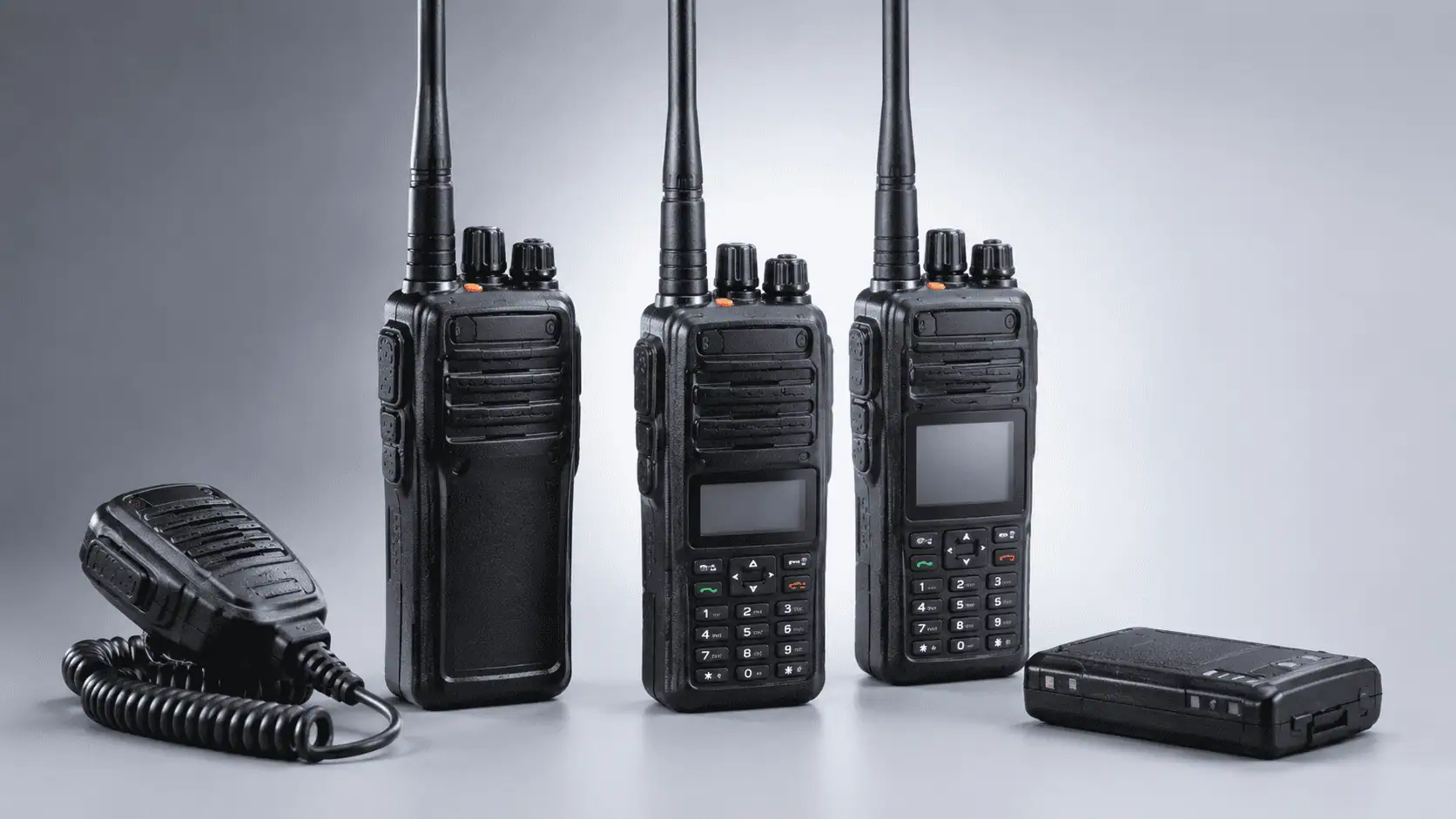
A traditional walkie talkie is a two way radio that uses radio frequencies to communicate with other radios on the same channel. It can be an analog radio or a digital radio such as a DMR radio.
Traditional walkie talkies are widely used for security guards, hotels, warehouses, factories, schools, events, construction sites and manufacturing plants. The main advantage is simple local communication without SIM cards or cellular data.
PoC Radio / LTE Walkie Talkie
Best for Wide-Area Push-to-Talk
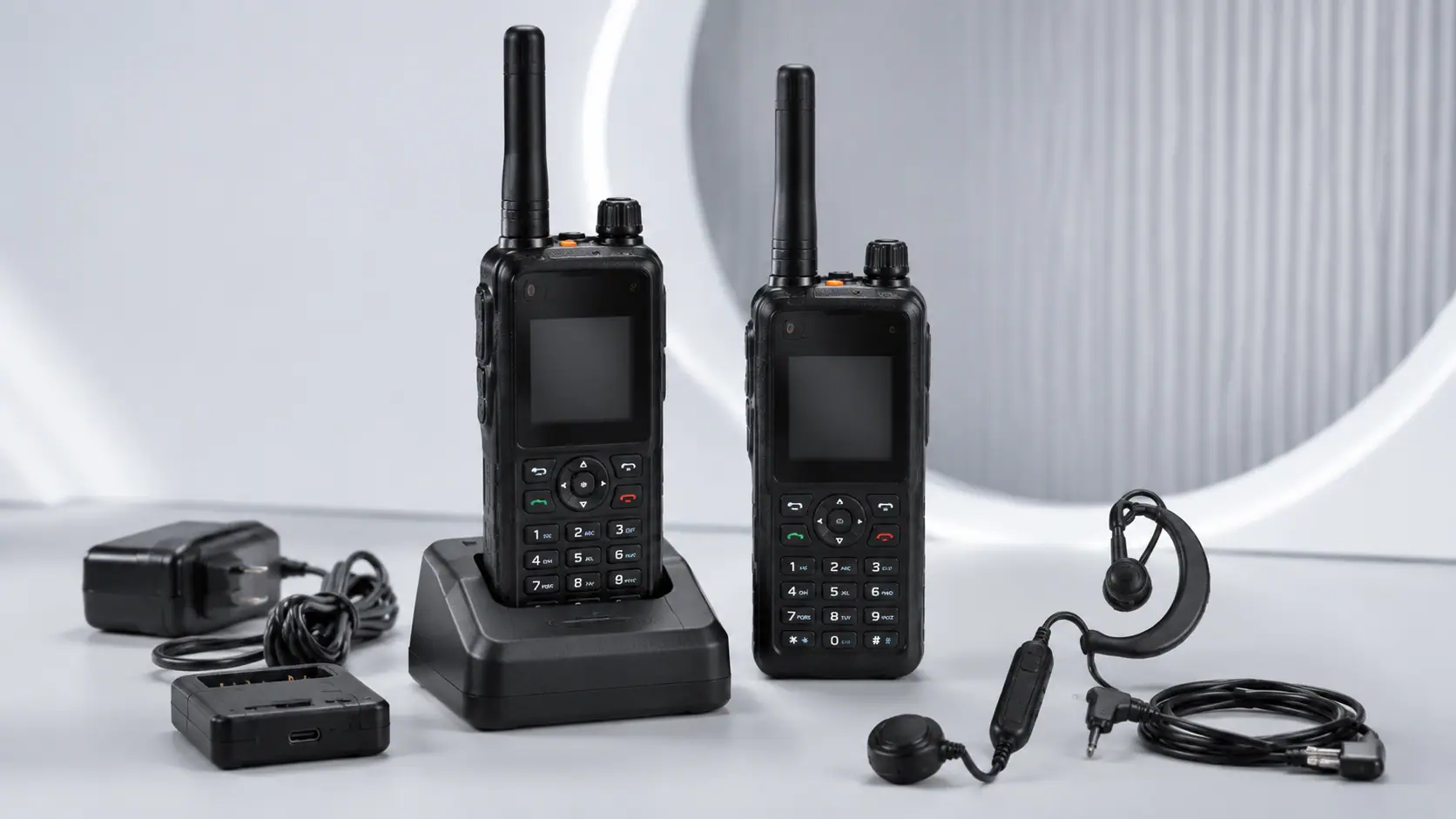
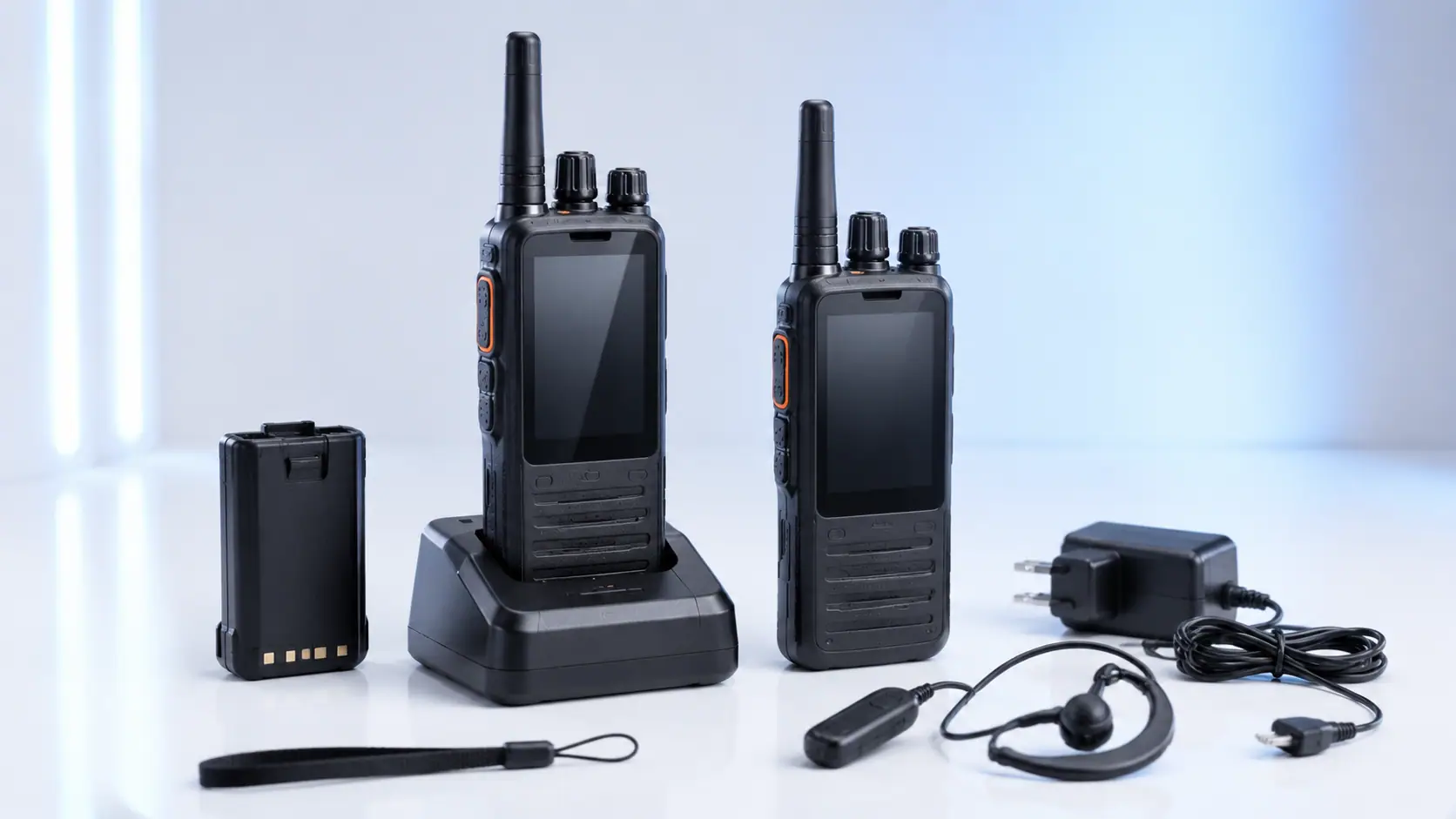
A PoC radio means Push-to-Talk over Cellular radio. It is also called a network radio, cellular walkie talkie, LTE walkie talkie or 4G walkie talkie. Instead of using only radio frequencies, it uses mobile data networks or Wi-Fi.
Depending on the device and platform, PoC radios can support wide-area communication, GPS tracking, dispatch management, private groups, user permissions and communication across different cities or branches.
PoC Radio vs Traditional Walkie Talkie Comparison
| Item | PoC Radio / LTE Walkie Talkie | Traditional Walkie Talkie |
|---|---|---|
| Communication Method | Push-to-talk over cellular or Wi-Fi network | Push-to-talk over radio frequency |
| Coverage | Wide-area, citywide or nationwide if network is available | Local range, extendable with repeaters |
| SIM Card | Usually required for mobile network use | Not required for basic use |
| Monthly Cost | May require SIM data, platform or service fees | No SIM cost; repeater or license cost may apply depending on market |
| GPS and Dispatch | Often supported by platform | Usually not included in basic analog radios |
| Best Applications | Logistics, transport fleets, city patrol, multi-branch teams, field service | Factories, hotels, warehouses, security, schools, events, construction sites |
| Infrastructure | Needs network coverage and platform management | May need repeaters for larger buildings or sites |
| Ease of Use | Easy for users, but requires account and network management | Very simple after channel setup |
Pros and Cons
PoC Radio Advantages
- Wide-area communication across cities, branches and mobile routes.
- Can support GPS tracking, dispatch platform and group management.
- No need to build repeater infrastructure for long-distance communication.
Traditional Radio Advantages
- Simple push-to-talk communication for local teams.
- No SIM card or cellular network required for basic use.
- Good for factories, hotels, warehouses, security guards and construction sites.
PoC Radio Limitations
- Depends on cellular or Wi-Fi network coverage.
- May require SIM cards, data plans or platform service fees.
- Platform setup and user account management may be required.
Traditional Radio Limitations
- Coverage is usually limited to a local area unless repeaters are used.
- Basic analog models usually do not include GPS or dispatch management.
- Large buildings, basements or complex sites may require coverage planning.
Manufacturer Recommendation
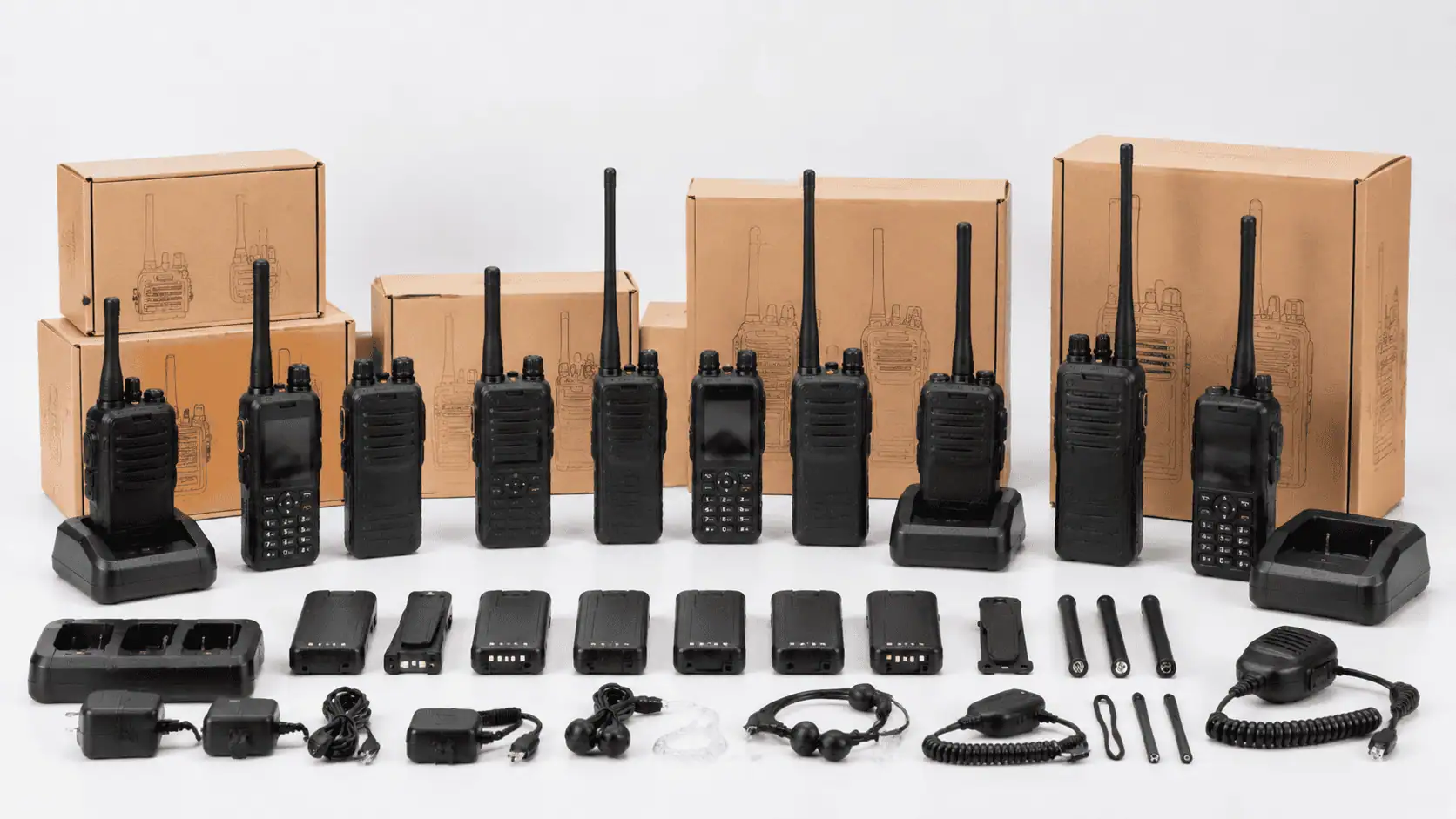
If you are buying radios for a fixed site such as a factory, hotel, warehouse or construction project, start by comparing analog radios and DMR radios. If your team moves across cities or needs platform dispatch, compare PoC radios, LTE walkie talkies and 4G walkie talkies.
Buyer Checklist Before Ordering
| Question | Why It Matters |
|---|---|
| Where will users communicate? | One local site may fit traditional radios; wide-area routes may fit PoC radios. |
| Is cellular coverage stable? | PoC radios depend on mobile network or Wi-Fi quality. |
| Do you need GPS or dispatch? | PoC radios usually offer stronger platform features. |
| Do you want to avoid monthly service costs? | Traditional radios may reduce SIM and platform service management. |
| How many users do you have? | User quantity affects platform, channel planning, accessory bundles and quotation. |
| Which country will the radios be used in? | Frequency rules, SIM bands, plug types and certification requirements may differ. |
Application Guide
Which Radio Type Fits Your Project?
- PoC Radio: logistics, delivery, city patrol, mobile service teams and multi-branch operations.
- LTE / 4G Walkie Talkie: wide-area push-to-talk with cellular network and platform support.
- DMR Radio: clearer digital voice, group communication and repeater-compatible local systems.
- Analog Radio: simple, cost-effective local communication for daily business use.
FAQs
Is PoC radio the same as LTE walkie talkie?
They are closely related. Many LTE walkie talkies are PoC radios because they use cellular networks for push-to-talk communication.
Do PoC radios need a SIM card?
Most PoC radios need a SIM card or mobile data service for wide-area communication. Some models may also support Wi-Fi.
Are traditional walkie talkies still useful?
Yes. Traditional walkie talkies are still very useful for local sites, simple teams, factories, hotels, warehouses, construction sites and security teams.
Which is better for logistics teams?
PoC radios are often better for logistics teams because they can support wide-area communication, GPS tracking and dispatch management.
Which is better for hotels and factories?
Traditional analog radios or DMR radios are usually better for hotels and factories because users communicate inside a local site and need simple instant voice communication.
Related Product Pages
PoC Radio Manufacturer
Network radios for wide-area push-to-talk communication.
LTE Walkie Talkie Manufacturer
LTE radios for cellular push-to-talk projects and mobile teams.
DMR Radio Manufacturer
Digital radios for local business communication and repeater systems.
Need PoC Radios or Traditional Walkie Talkies?
We supply PoC radios, LTE walkie talkies, 4G walkie talkies, analog radios, DMR radios and accessories for distributors and project buyers. Send your country, application, quantity and coverage requirement for a suitable recommendation.
Email: lorabanzhitao@gmail.com
WhatsApp: +86 173 1689 5054