
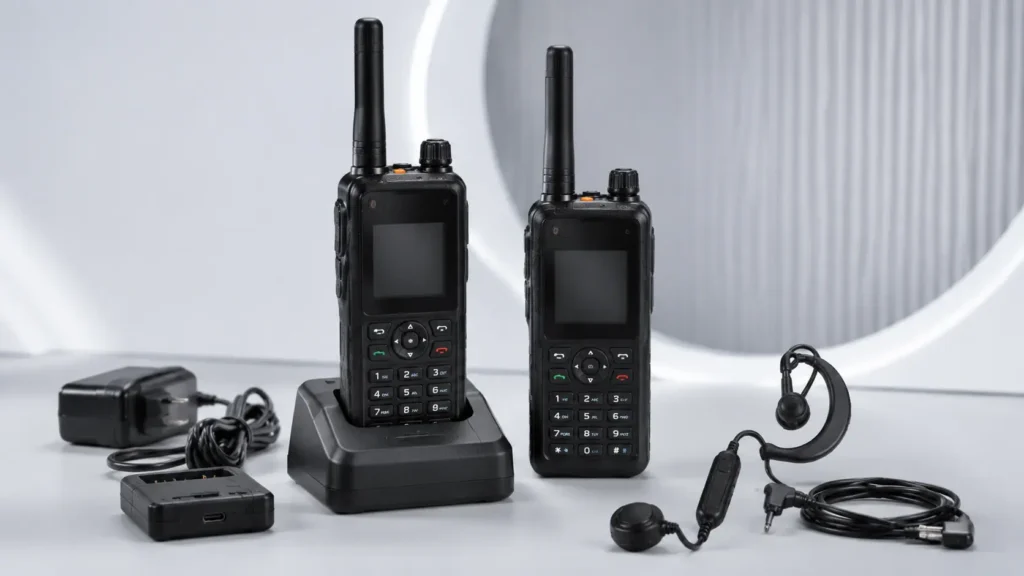
What Does a PoC Radio System Cost?
A PoC radio quotation should identify the device price, platform service, network connectivity and required accessories. Depending on the solution, data and platform access may be bundled or billed separately. Compare the complete operating cost over the same period, not just the purchase price of each radio.
This guide helps distributors, security companies, logistics operators and multi-site businesses prepare a comparable quotation request. Actual pricing depends on the selected hardware, country, service plan and fleet requirements.
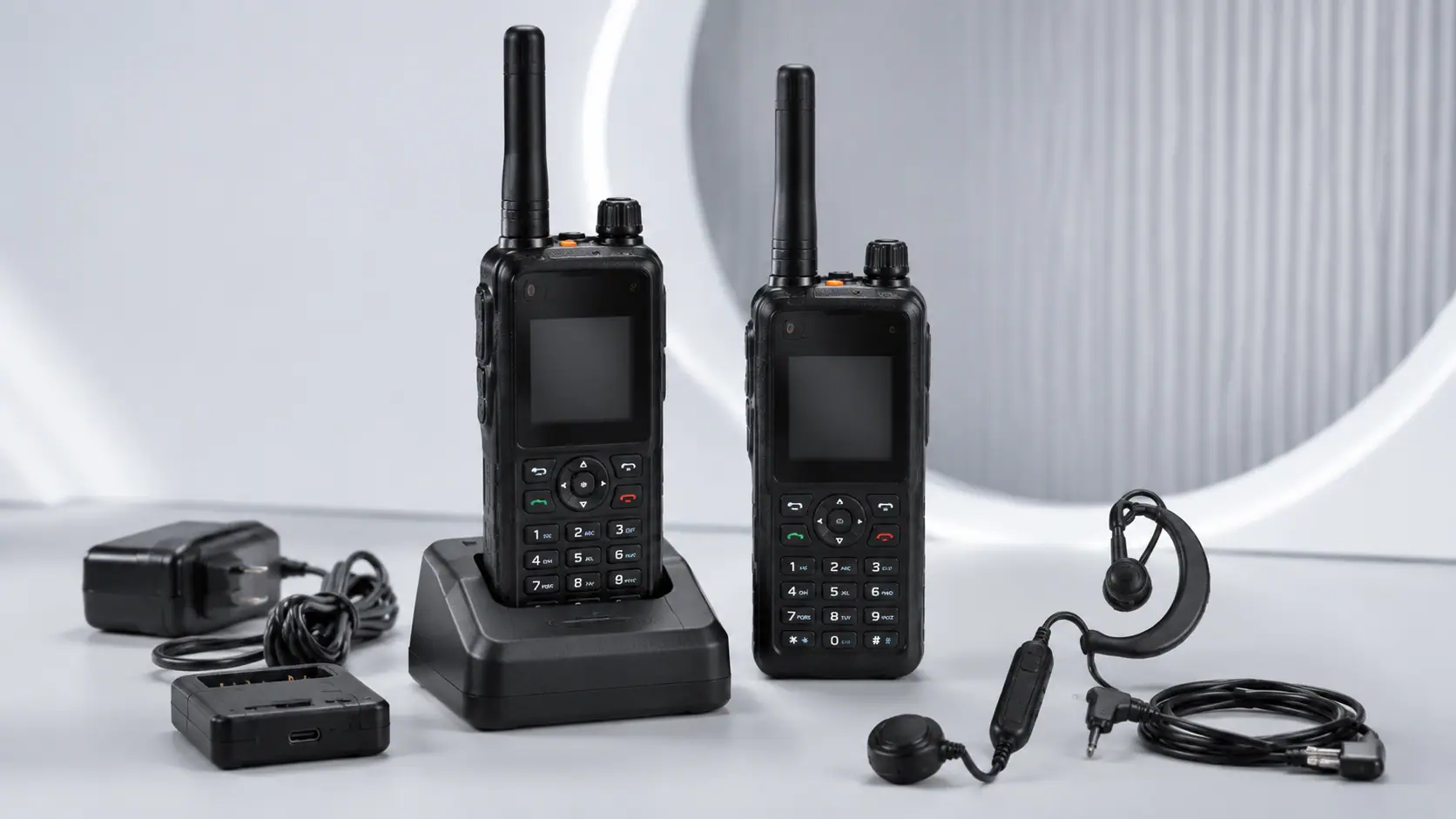
1. Separate Hardware from Recurring Services
The radio is one part of the system. Confirm how the selected device connects to its push-to-talk platform, who provides the network service and what must remain active for communication to work.
Ask whether the quotation is hardware-only or includes an initial service period. Record the renewal cost and the date on which charging begins. A trial account and a production subscription should not be treated as the same purchase.
As an example of differing commercial arrangements, Motorola Solutions describes WAVE PTX device options with bundled SIM data or customer-provided SIM service in its official brochure. Those terms apply to that offering; confirm the structure of your proposed system separately.
2. Ask for an Itemized Quotation
| Cost Item | What to Ask | Comparison Point |
|---|---|---|
| Devices | Which exact model and hardware version are included? | Quantity, warranty and supplied accessories |
| Platform service | Is it charged per device, user or account? | Initial term, renewal price and included functions |
| SIM and connectivity | Is data bundled or separately purchased? | Supported country, operator and usage conditions |
| Dispatch | Are dispatcher accounts included? | Number of seats and enabled functions |
| Additional features | Which requested features cost extra? | Recording, location services or integrations where offered |
| Accessories | Which batteries, chargers and audio accessories are supplied? | Complete working kits and spare-item prices |
| Setup and support | Who configures accounts and talk groups? | Initial setup, training and ongoing support scope |
| Delivery | What shipping terms apply? | Freight and responsibility for import charges |
3. Compare the Same Number of Active Users and Months
Ask each supplier to quote the same fleet size and operating period. Include spare devices, but clarify whether inactive spares incur service charges.
Planning formula: hardware and accessories + setup + service charges over the selected term + delivery and applicable import costs + planned maintenance or replacement costs.
Count bundled charges only once. Also record assumptions about renewals, cancellation and fleet growth so the comparison remains meaningful.
Illustrative example: one quotation includes 12 months of platform access, while another lists only the radios. The second quotation may appear cheaper until the required service is added. Request matching supply scopes before choosing.
4. Confirm Country, Network and Platform Compatibility
Do not assume that a device described as “4G” will operate with every operator or platform. Obtain written confirmation of the supported hardware version, network requirements and intended platform.
State the country and the actual work locations. Ask about any roaming restrictions or additional costs if the fleet will cross borders.
PoC communication depends on usable connectivity and service availability. A broad coverage claim does not establish reliable operation inside your buildings, along every route or during an outage.
5. Run a Pilot Before Committing the Full Fleet
Request a pilot using the proposed device, platform and connectivity arrangement. Agree on the trial duration, charges, return terms and acceptance criteria before it starts.
Evaluate calls at the locations and times that matter to your team. Include indoor work areas, outdoor routes, shift changes and the intended audio accessories.
Record call setup, intelligibility, missed calls, battery performance under actual use and recovery after connectivity interruptions. For dispatch functions, check the exact features and account permissions you intend to purchase.
A successful pilot should produce a documented purchasing decision. It should not depend only on a short demonstration in an area with strong coverage.
6. Check Renewals and Account Control
Ask who administers the fleet and who can add users, change groups or disable a lost device. Confirm what happens when the subscription expires and how service is restored.
Identify any platform restrictions before selecting hardware. A device should not be assumed to support a different platform simply because both systems provide push-to-talk service.
For distributors, clarify whether customers receive separate accounts, who invoices renewals and which party handles technical support.
7. Define the Complete Working Kit
Specify the charger type, power plug, battery arrangement, belt clip and audio accessories required for each role. Check accessory compatibility with the selected model rather than ordering from connector appearance alone.
For private-label orders, list packaging, labels and configuration as separate requirements. Ask how customization affects the sample, price and delivery schedule.
Ready to source? See our OEM PoC radio manufacturing page for models, OEM options and quotation details.
PoC Radio Cost Structure: Where the Money Goes
PoC radio budgets are often built around the handset price, but hardware is only one part of the total. Platform licenses, data plans and support continue for as long as the fleet runs, so a realistic budget looks at every component over the expected life of the system.
| Cost component | Upfront or recurring | Relative weight | What to ask the manufacturer |
|---|---|---|---|
| Radio hardware | Upfront | Medium to high at purchase | Which models, which LTE bands, rugged or standard housing |
| Platform license | Recurring (per user, usually yearly) | Medium over time | License term, renewal terms, what features are included |
| SIM and data | Recurring (monthly) | Low to medium per user | Whether SIMs are supplied, typical data use per user |
| Dispatcher console | Upfront or recurring | Low to medium | Number of seats, web or desktop, recording and GPS options |
| Accessories | Upfront, then replacements | Low to medium | Batteries, chargers, speaker mics, earpieces compatible with the model |
| Support and maintenance | Recurring or per case | Low but important | Firmware updates, repair process, platform support channel |
Actual figures depend on the model, platform, quantity and country, so ask for a quote that shows each component separately. A single bundled price makes it hard to compare suppliers or plan renewals. For a wider comparison with apps and conventional radios, see walkie talkies vs PTT apps total cost of ownership.
Questions that expose hidden costs
- Is the first year of platform license included with the radio, and what does renewal cost per user?
- Are dispatcher console seats charged separately from radio licenses?
- Is call recording, GPS history or video an extra-cost module?
- Who pays for SIM cards, activation and replacement if a SIM is lost or damaged?
- Are firmware updates free for the life of the model, or only during a support period?
- What happens to licenses if a radio is lost, stolen or replaced under repair?
Written answers to these questions make quotes from different suppliers directly comparable and prevent surprises at the first renewal.
It also helps to model costs over the expected life of the fleet rather than one year. Multiply recurring items by the number of users and years, add expected battery and accessory replacements, and compare the result with the hardware price alone. The gap is often larger than buyers expect, and it is where suppliers differ most.
PoC Platform Options: Pros and Cons
The platform is the software service that connects radios, groups and dispatchers. Your choice affects recurring costs, features and how easy it is to change supplier later.
| Platform option | Pros | Cons | Best fit |
|---|---|---|---|
| Manufacturer’s own platform | Tested with the hardware, often simpler setup | May tie you to one hardware brand | Buyers who want one supplier for radios and service |
| Third-party public platform | Wide device support, established features | Separate contract and license fees | Distributors serving many brands and customers |
| Private or self-hosted server | Control over data and configuration | Needs IT resources and maintenance | Large organisations with data or security requirements |
| Carrier-provided PTT service | Integrated with mobile plans in some markets | Availability and device lists vary by country | Buyers already using a carrier’s business services |
Ask whether radios can be moved to another platform if needed, and whether that requires new firmware. Distributors should also ask whether they can resell licenses and manage their own customers’ accounts. More detail is available in our PoC radio supplier guide.
Distributors should also ask how licenses are activated and managed. A clear reseller portal saves time when customers add users, move radios between groups or suspend licenses for seasonal staff.
Planning Data Usage for a PoC Fleet
PoC voice is compressed and generally uses modest data, but usage rises with features such as GPS tracking, video, photo sharing and long call times. Planning data correctly avoids paying for oversized plans or losing service when a small plan runs out.
Factors that drive data use
- Talk time: the number of minutes each user transmits and receives per shift
- Group size: every member of a group receives the audio stream
- GPS reporting interval: frequent location updates add steady background data
- Video and images: much heavier than voice, and should be planned separately
- Firmware and app updates: occasional but larger downloads
- Run a pilot with a small group on real shifts for several weeks.
- Read actual data use per SIM from the carrier or platform reports.
- Add a safety margin for busy periods and incidents.
- Choose pooled or shared data plans if your carrier offers them, so heavy and light users balance out.
- Review usage after the first few months and adjust plans.
Also confirm that the radio supports the LTE bands used by carriers in each country where it will operate. Band support differs between models, and a radio that works well in one region may have weak coverage in another. See our 4G walkie talkie range or ask our team to check band support for your target market.
Buyer Questions
Do all PoC radios have a monthly fee?
Commercial arrangements vary. Some use recurring subscriptions, while others may offer different licensing or hosting options. Confirm platform and connectivity costs even when a supplier advertises no monthly platform fee.
Can I use my own SIM card?
Only if the proposed device and service arrangement support it. Confirm operator compatibility, data requirements and any provisioning restrictions before purchase.
Does nationwide coverage mean the radio works everywhere?
No. Actual operation depends on connectivity at the location and the availability of the relevant services. Test the areas important to your business.
Can I replace an existing DMR system with PoC radios?
Evaluate coverage, outage requirements, workflows and any required interoperability first. Treat integration with existing radios as a specific project requirement, not an automatic feature.
What are the recurring costs of a PoC radio system?
The main recurring costs are platform licenses, usually per user per year, and SIM data plans, usually monthly. Some buyers also pay for dispatcher console seats and support. Exact amounts depend on the platform, carrier, country and number of users, so ask for each item separately in the quote.
How much mobile data does a PoC radio use?
Voice-only PoC use is generally modest, but data use rises with talk time, group size, GPS reporting and any video or photo features. The most reliable way to plan is a short pilot on real shifts, then reading actual usage from carrier or platform reports and adding a safety margin.
Should I choose the manufacturer’s PoC platform or a third-party one?
A manufacturer’s own platform is often simpler to set up and tested with the hardware. A third-party platform can support several brands and may suit distributors. Ask about license terms, feature lists and whether radios can move between platforms before deciding, since switching later may need new firmware.
Request a Complete PoC Radio Quotation
Send your destination country, fleet size, work locations and required functions. Ask for an itemized proposal covering devices, platform access, connectivity arrangements, accessories and a pilot option.
Email: lorabanzhitao@gmail.com