
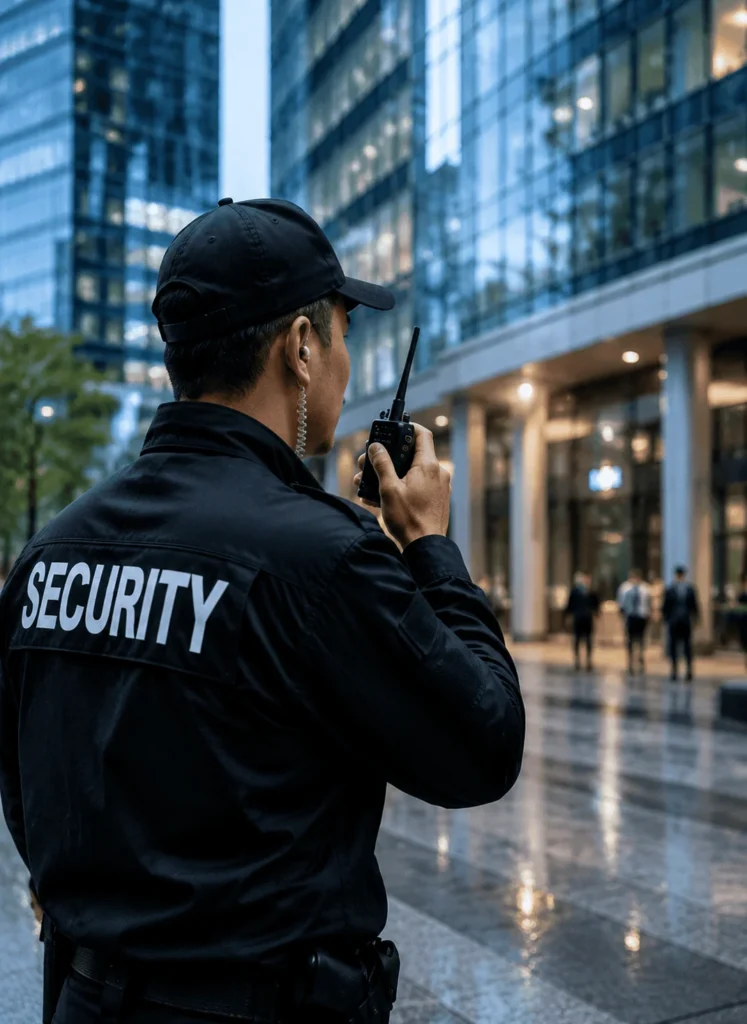
Security Guard Radios: A Bulk Buying Guide for Guard Firms
Short answer: Security teams generally need discreet earpiece-compatible radios with a dedicated emergency channel, strong battery life for long shifts, and coverage that reaches every corner of the property or venue. Encryption matters most for teams handling sensitive sites or high-profile events.
Security guard companies and event security providers work across very different environments: office buildings, retail centers, warehouses, concerts and large outdoor events. A radio that performs well in a small office lobby may not reach across a festival ground or through a multi-level parking structure.
This guide explains what security staffing companies, guard service providers and event security firms should confirm before ordering radios in bulk.
What Security Teams Need From a Radio
- Discretion: A covert or acoustic-tube earpiece so communication is not overheard by the public.
- Emergency or lone-worker button: A dedicated panic function that alerts a control point or all-call channel instantly.
- Reliable coverage: Full coverage across the property, venue, or event grounds, including stairwells and underground areas.
- Long battery life: Guard shifts often run 8 to 12 hours, sometimes with overtime.
- Durability: Radios are worn daily on belts or vests and need to withstand regular impact and weather exposure.
Analog, DMR or Encrypted Radios for Security Work?
Analog Radios
Basic analog radios are low-cost and simple, but offer no privacy. Conversations can be picked up by any compatible receiver on the same frequency, which is a concern for sensitive sites.
DMR Digital Radios
DMR radios provide clearer audio, longer battery life, and optional encryption, making them the standard choice for professional guard companies protecting commercial and residential properties.
Encrypted Radios for High-Security Sites
For government buildings, VIP protection, banks or high-profile events, encrypted DMR radios prevent eavesdropping on radio traffic and are often a client or contract requirement.
Radios for Event Security vs Static Site Security
Static site security, such as a building or campus, typically needs a fixed repeater or coverage system tuned to that property. Event security is different: coverage needs change with every venue, crowd size can affect radio traffic volume, and teams often need to coordinate with venue staff, medical teams and law enforcement. PoC radios using cellular networks are increasingly used for large outdoor events where a temporary repeater is impractical.
How to Choose the Best Security Radios
- Map the property or venue for known dead zones before ordering
- Confirm whether encryption is required by your client contracts
- Check earpiece compatibility and comfort for full-shift wear
- Ask about panic button and all-call functions
- Plan for spare batteries and charging stations at guard posts or control rooms
Common Mistakes When Buying Security Radios
- Choosing analog for sensitive sites: Unencrypted analog traffic can be intercepted easily.
- Underestimating venue size for events: A radio that works in a small office will not necessarily cover a stadium or festival ground.
- Skipping earpiece testing: Comfort and audio clarity matter for guards wearing an earpiece for a full shift.
- No backup plan for radio failure: Spare units should be available for guards, especially during high-profile events.
Can You Order OEM Radios for a Guard Company?
Yes. Security staffing companies, guard service providers and radio distributors serving the security industry can order private-label radios with custom color, logo, packaging and pre-programmed channel plans, including a dedicated emergency channel. Sample units can be field-tested at a real site or event before a bulk order.
Ready to source? See our walkie talkies for security guards page for models, OEM options and quotation details.
Security Radio FAQs
Do security radios need encryption?
Not always. Standard commercial sites often use unencrypted DMR radios, but encryption is recommended or required for high-security sites, VIP protection and some client contracts.
How many radios does a guard company typically need per contract?
This depends on site size and guard headcount, but most contracts equip every guard on shift plus a supervisor and control point, with spares for backup.
Can radios cover a large outdoor event?
Yes, either with a temporary repeater setup or with PoC radios that use cellular coverage, which is often more practical for one-time or short-term events.
What battery life is typical for security radios?
Most DMR security radios provide 12 to 16 hours on a full charge with typical use, which covers a standard shift with a safety margin.
Sourcing guard radios for the Middle East? See our supplier pages for UAE and Saudi Arabia, including local import and type approval notes.
Request a Security Radio Recommendation
To get an accurate recommendation and quote, please tell us:
- Site or venue type and approximate size
- Guard headcount and shift length
- Whether encryption is required
- OEM or branding requirements
- Target quantity and delivery timeline
We can recommend a suitable security radio model, accessory package and OEM option for your contracts.