
Short answer: There is no single best walkie talkie for every noisy manufacturing environment. The right system combines a suitable radio platform, a compatible speaker microphone, earpiece or headset, practical controls, reliable site coverage and a charging plan that fits each shift. Compare analog, DMR and PoC radios, then test the complete radio-and-accessory kit during actual production before ordering a fleet.
A louder speaker is not a complete solution. Operators must be able to hear a message, speak without moving into an unsafe position, use the controls with required workwear and maintain communication across the areas that matter. This guide is for manufacturing buyers who need a repeatable way to evaluate those requirements without relying on an unsupported “best model” list.

Choose the Communication System, Not Just the Radio
In a loud plant, the radio body is only one part of the communication path. A well-matched system considers the user’s role, noise source, hearing protection, radio position, microphone distance, coverage and charging workflow together.
| Work Area | Communication Problem to Test | Possible Setup to Evaluate |
|---|---|---|
| Assembly line | Continuous machine noise and limited hand movement | Radio with accessible PTT plus a compatible speaker microphone or approved headset arrangement |
| Machine shop | High local noise and users wearing required PPE | Radio and audio accessory tested with the site’s actual protective equipment and work procedures |
| Warehouse | Moving users, metal racks and loading areas | Handheld radio, practical wearing option and coverage test across aisles and docks |
| Maintenance team | Changing locations, gloves and short technical messages | Accessible controls, suitable audio accessory and documented channel plan |
| Multi-floor facility | Noise plus stairwells, walls and separated departments | Radio platform and site coverage design tested independently from audio loudness |
| Multiple sites or wide routes | Teams operate beyond one local radio-coverage area | PoC/LTE option evaluated with network availability, platform and operating requirements |
These are test directions, not universal product prescriptions. The accepted configuration should be based on the specific facility, country, radio system, required protection and sample results.
Start with a Noisy-Factory Communication Survey
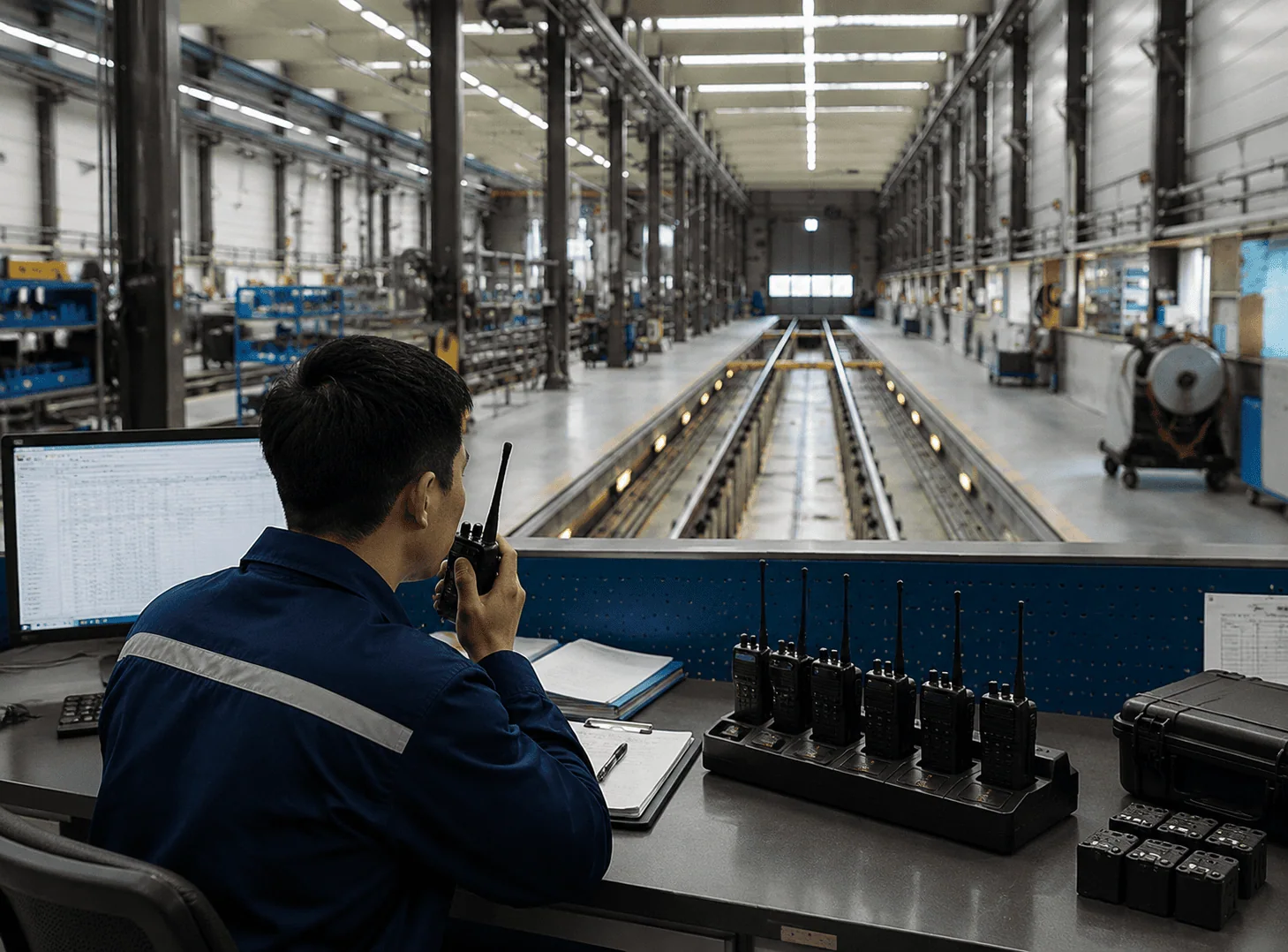
Before comparing radios, map where communication actually fails. A single statement such as “the factory is noisy” does not show whether the problem occurs at one machine, throughout a department or only when operators move between buildings.
- Noise pattern: Record whether the noise is continuous, intermittent or concentrated near specific equipment.
- User roles: Separate production operators, maintenance, quality, warehouse, supervisors, safety and security teams.
- Required PPE: Document helmets, gloves, hearing protection and other equipment that may affect wearing position or control access.
- Message type: Identify routine coordination, maintenance requests, production changes and emergency procedures without assuming one channel fits every use.
- Coverage zones: Include production lines, stairwells, utility rooms, warehouses, offices, yards, loading docks and routes between buildings.
- Shift workflow: Record users per shift, whether radios are assigned or shared, charging locations and handover time.
Compare Audio Options for Loud Work Areas
The best audio arrangement depends on how the radio is worn, how the user speaks and listens, and what protective equipment the workplace requires. Any audio accessory should be explicitly compatible with the selected radio. It should also fit the employer’s safety program; a communication accessory should not be treated as a substitute for required hearing protection.
| Audio Option | When It May Help | What the Sample Test Must Check |
|---|---|---|
| Built-in speaker and microphone | Simple use where the radio can be held or worn in an accessible position | Message intelligibility, microphone distance, PTT access and radio placement |
| Remote speaker microphone | Users who wear the radio on a belt or need the microphone closer to the upper body | Connector fit, cable routing, PTT feel, microphone position and received audio |
| Single-ear earpiece | Direct audio delivery or discreet communication where workplace rules allow it | Connector wiring, comfort, hygiene, retention and use with required PPE |
| Headset or hearing-protection communication solution | Applications where the approved workplace setup requires a specialized wearing arrangement | Documented compatibility, protection requirements, controls, comfort and user training |
| External PTT accessory | Users who need easier transmit control while wearing gloves or carrying tools | Switch position, accidental activation risk, cable strain and radio behavior |
Do not select an earpiece or speaker microphone only because its plug appears to fit. Connector spacing, pin wiring, PTT behavior and microphone circuitry can differ. The walkie talkie accessories sourcing guide explains the model, connector and electrical details to confirm.
Analog vs DMR vs PoC for Noisy Manufacturing
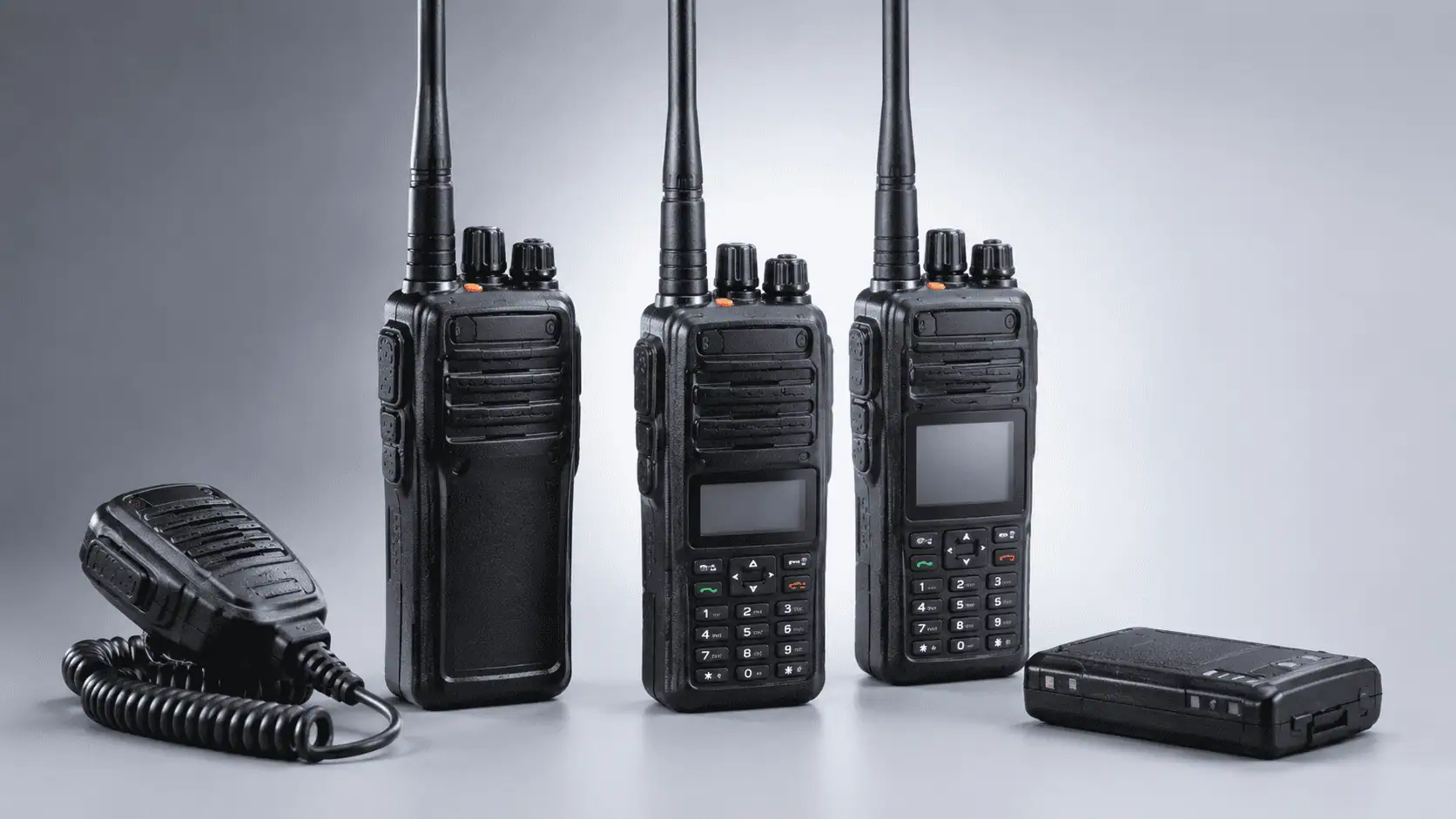
Radio technology affects system design, but it does not remove the need to test audio accessories and coverage. Use the comparison below as a shortlist, then verify supported functions on the exact model and system.
| Radio Type | Reason to Evaluate It | Questions Before Selection |
|---|---|---|
| Analog radio | Existing analog fleet, straightforward local communication or a simple operating requirement | Will it interoperate with the current system? Are audio accessories and coverage acceptable during production? |
| DMR radio | Digital local-radio system, structured group communication or a supported repeater plan | Which DMR tier and features are supported? How will channels, talk groups, repeaters and accessories be configured? |
| PoC/LTE radio | Communication across separated sites or routes using a supported network and platform | Which network, SIM, platform, subscription, server and coverage conditions apply in the target market? |
A DMR label alone does not prove that a radio will be easier to understand next to a particular machine. A PoC label does not prove that network service is available in every production area. An analog fleet may remain practical if it meets the site’s tested requirements. Compare the exact systems rather than treating the technology name as the result.
For a deeper product-level review, see the DMR radio sourcing page or the PoC radio sourcing page.
Features to Verify on the Exact Radio
| Selection Area | Why It Matters | Evidence to Request or Test |
|---|---|---|
| Audio path | Speaker, microphone and accessory determine how users hear and speak | Production-hour sample test with the complete kit |
| Controls | Users may wear gloves or operate the radio without looking at it | Hands-on test of PTT, knobs, side keys and accessory controls |
| Accessory interface | Audio and programming accessories are model-specific | Compatibility statement, connector details and tested sample |
| Coverage support | Walls, equipment, floors and distance can create dead zones | Site walk test and documented repeater or network requirements |
| Battery workflow | Shared fleets and shift changes require an organized charging process | Battery and charger specifications plus a shift-based runtime test |
| Environmental or safety requirements | Some sites require documented protection or approvals | Current documents for the exact model, configuration, country and use case |
| Programming and fleet control | Consistent settings reduce user confusion | Approved channel plan, configuration record and programming responsibility |
Do not infer an IP rating, intrinsically safe status, frequency approval, battery runtime or noise-reduction performance from product appearance or generic marketing language. Request current documentation that identifies the exact model and scope when any of these factors is required.
Coverage Problems and Noise Problems Are Different
A worker who cannot hear a nearby radio has an audio-intelligibility problem. A radio that cannot reliably connect between two locations has a coverage or system problem. A facility can have both, but each requires a different test.
For Audio Intelligibility
- Test short, realistic messages beside operating equipment.
- Compare radio placement and compatible audio accessories.
- Include operators who will use the equipment every day.
For Site Coverage
- Walk the required routes and test known difficult areas.
- Record the exact locations and radio settings used.
- Evaluate a repeater or network solution only from the measured coverage requirement.
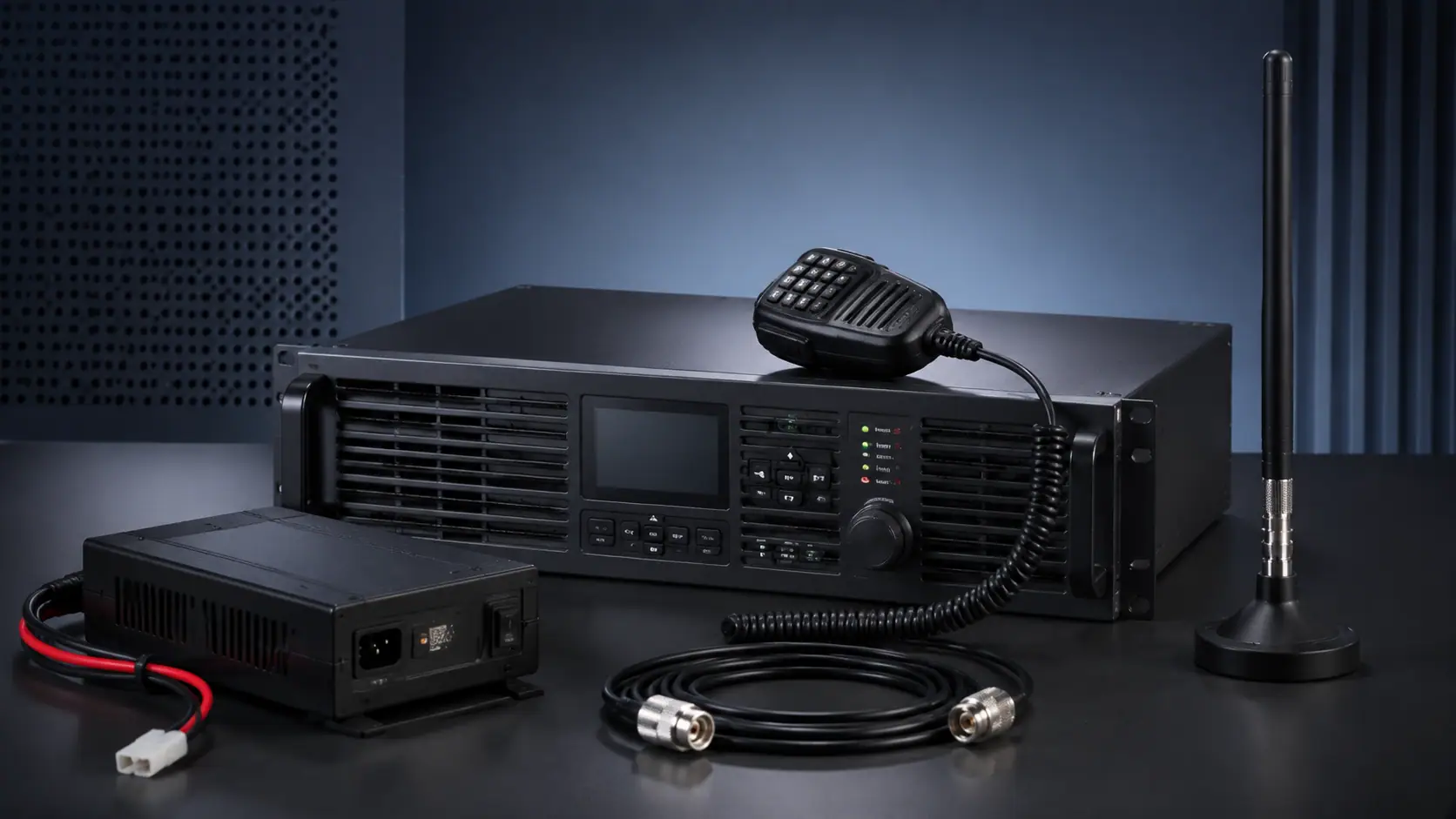
Noise by itself is not a reason to install a repeater. A repeater may be part of the solution when the radio system cannot cover required locations, but it does not make a speaker or earpiece easier to hear. Likewise, a headset may improve the audio arrangement for an approved use case but cannot repair a radio dead zone.
Run a Production-Hour Sample Test
A quiet office demonstration cannot represent a running factory. Test samples during normal production, using the final radio, battery, antenna and audio accessory combination wherever possible.
| Test Item | Method | Record |
|---|---|---|
| Receive intelligibility | Send short work-style messages in each noise zone | Correctly understood, repeated or missed |
| Transmit intelligibility | Speak from the intended microphone position | Feedback from receiving users in multiple locations |
| Control access | Operate PTT and essential controls with required workwear | Ease of use, errors and accidental activation |
| Accessory comfort | Wear the proposed setup for a realistic work period | Fit, cable management, interference with PPE and user acceptance |
| Coverage | Walk all required routes and fixed work areas | Location, direction, radio settings and any failed call |
| Shift power | Use the configured radio during the actual duty cycle | Start/end battery indication, charging method and handover result |
| Fleet procedure | Test department channels, call signs and escalation rules | Misrouted calls, congestion and training questions |
Use the same score sheet for each candidate. Record the model, firmware or configuration, accessory part numbers, channel settings, test locations and participants. This turns a subjective “sounds loud” decision into a repeatable procurement comparison.
Plan the Fleet Around Shifts and Departments
A radio fleet should match how people work. Define which users need assigned radios, which devices can be shared and where charging happens. Separate production, maintenance, warehouse, quality and security communication when operationally appropriate, while preserving a clear escalation path.
- Number of users and simultaneous users per shift
- Departments, groups and supervisors who must communicate
- Assigned versus shared radios and asset identification
- Spare battery or radio policy based on the measured duty cycle
- Single-unit or multi-unit charging workflow and destination plug requirements
- Programming records, approved settings and responsibility for changes
What to Send for a Noisy-Factory Radio Quote
A useful quotation starts with the application, not just a request for the “best radio.” Send:
- Factory type, main machines and the areas where messages are difficult to understand
- Required PPE and preferred radio wearing position
- Building size, number of floors, construction materials and outdoor areas
- User count, departments, simultaneous users and shift pattern
- Existing radio type, frequencies, repeaters or network platform, if applicable
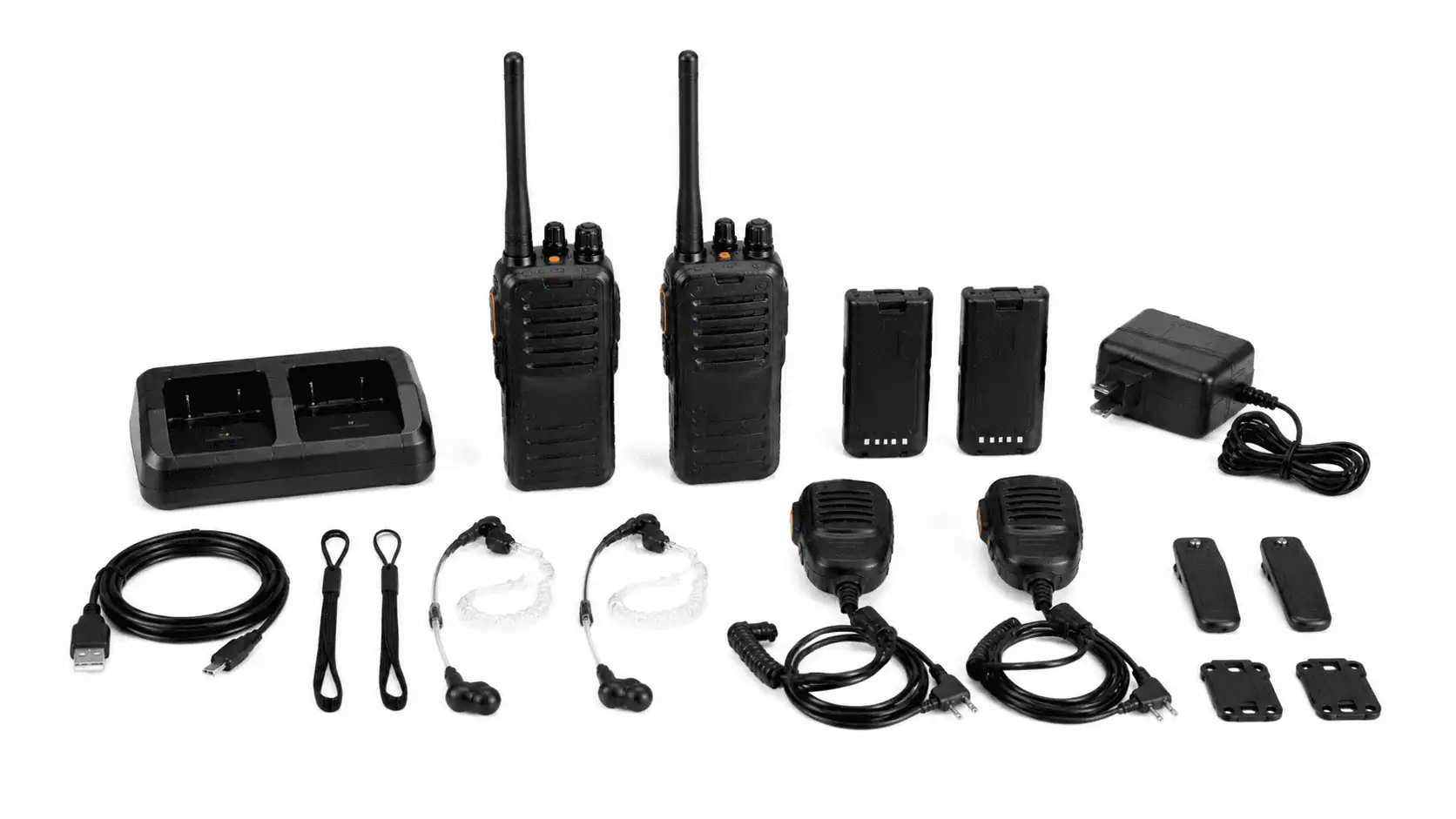
- Required batteries, chargers, speaker microphones, earpieces or other accessories
- Target country, quantity, requested samples and required documentation
- Logo, labels, packaging, manual or other OEM requirements, if needed
For broader plant planning, use the factory walkie talkie guide. For private-label and distributor questions, review the OEM walkie talkie buying guide.
Noisy Manufacturing Radio FAQ
What are the best walkie talkies for noisy manufacturing environments?
The best option is the radio-and-accessory system that workers can understand and operate during actual production. Compare analog, DMR and PoC platforms, then test the exact radio with its speaker microphone, earpiece or headset, coverage design and charging workflow.
Is DMR always better for a noisy factory?
No technology label guarantees the result. DMR may be appropriate when a buyer needs a supported digital radio system, group organization or repeater planning, but audio intelligibility and coverage still need to be tested with the exact model and accessories.
Does a noisy factory automatically need a repeater?
No. A repeater addresses radio-system coverage, not the operator’s ability to hear audio beside machinery. Install or specify one only after the required locations and coverage gaps have been evaluated.
Should workers use an earpiece or a speaker microphone?
It depends on radio placement, job task, required PPE, workplace rules and user comfort. Test compatible samples in the intended work area. Do not treat a communication earpiece as a replacement for required hearing protection.
How should factory radios be tested before a bulk order?
Test the complete kit during normal production. Record receive and transmit intelligibility, control access, accessory fit, coverage at required locations, shift-power performance and the channel workflow. Use the same score sheet for every candidate.
What radio details require documentary confirmation?
Confirm any required frequency approval, IP rating, intrinsically safe status, battery specification, supported accessories, system compatibility and market-specific documents for the exact model and configuration. Do not rely on a generic product-family statement.
What information is needed for a quotation?
Provide the factory type, noise areas, PPE, coverage zones, user and shift counts, existing system, accessories, quantity, country, documentation needs and any OEM packaging requirements.
Need a Radio Test Plan for a Noisy Factory?
Send the factory type, noise areas, PPE, user count, shifts, building layout, existing system, target country and required accessories. These details can be used to prepare a radio-and-accessory shortlist for sample evaluation and quotation.
Email: lorabanzhitao@gmail.com · WhatsApp: +86 173 1689 5054